With 52–56 vacancies for English Literature announced as part of the 949-post MPPSC Assistant Professor recruitment 2026, this could be the last major recruitment cycle for this post. The exam is scheduled for July 12, 2026, and the application window closed on March 26, 2026.
If you’ve already cleared UGC NET or SET, you’re closer than you think — but the MPPSC English Literature preparation demands a specific approach that’s different from NET. Here’s a complete strategy to help you qualify the MPPSC Assistant Professor exam in 4 months.
MPPSC Assistant Professor Exam Pattern 2026
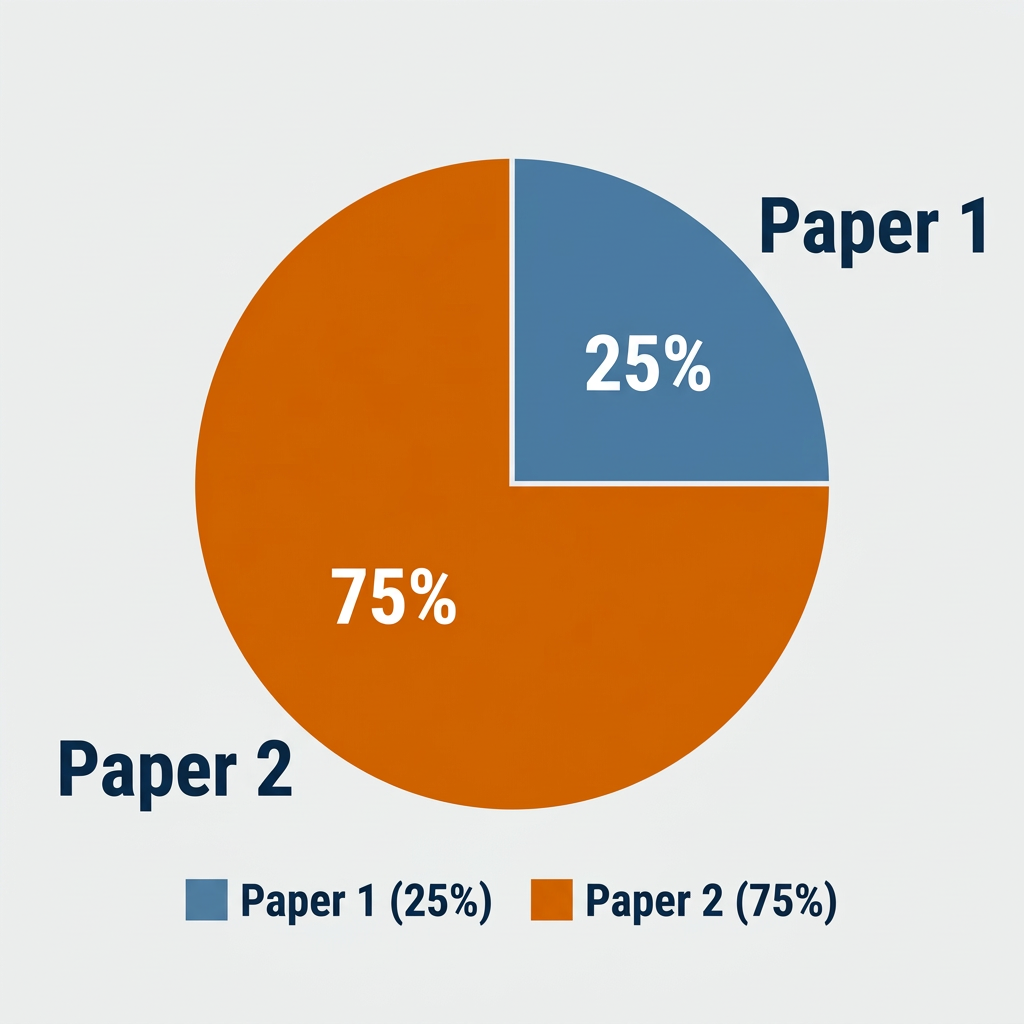
Understanding the MPPSC exam pattern is the first step in building an effective preparation strategy. The exam consists of two papers:
Paper 1 — General Knowledge (25% weightage)
- 50 questions covering Madhya Pradesh history, geography, polity, and economy
- Duration: 1 hour
- Marks: 200 (4 marks per question)
Paper 2 — English Literature (75% weightage)
- 150 questions covering the full English Literature syllabus
- Duration: 3 hours
- Marks: 600 (4 marks per question)
The exam is conducted offline using OMR sheets. After the written test, qualified candidates proceed to an interview round worth 100 marks, bringing the total to 900 marks.
Stuck at MPPSC English Literature Preparation?
Join our comprehensive MPPSC Course That Comes With 5000+ Topic-Wise Questions
How Negative Marking Changes Your MPPSC Strategy
The critical change in this cycle is confirmed negative marking. This fundamentally shifts how you should approach the MPPSC English Literature preparation.
In previous cycles without negative marking, unreserved category candidates who answered 135–140 questions correctly made it to the interview stage.
With negative marking in play, the target shifts significantly — scoring 105–110 correct answers with high accuracy could be enough for selection.
This means you should plan to skip around 50 questions you’re unsure about rather than attempting everything blindly.
Another important distinction: unlike UGC NET, which has become increasingly conceptual and analytical, MPPSC questions are largely factual. Rote learning and memorization play a bigger role here. Direct fact-based questions are common, so your preparation should reflect that difference.
MPPSC Paper 1 GK Preparation: Don’t Neglect the 25%
While English Literature is your main battleground, Paper 1’s 50 questions can make or break your selection. Here’s how to handle MPPSC Paper 1 without burning too much time:
Read a Madhya Pradesh newspaper daily (15–20 minutes). This builds passive knowledge of the state’s geography, current affairs, districts, and cultural developments. Over four months, this daily habit compounds significantly.
Build awareness of MP-specific topics. Madhya Pradesh has one of the highest concentrations of tribal communities in India. Expect questions from regional art forms, geographical distribution, and cultural heritage. Dedicate time to understanding the state’s tribal communities, wildlife sanctuaries, historical monuments, and administrative divisions.
Use existing resources smartly. Platforms like Physics Wallah or Unacademy offer courses designed for other MPPSC exams (nursing, constable, etc.) that cover the same GK syllabus. These work perfectly for Paper 1 preparation.
Time allocation: 1 to 1.5 hours daily for Paper 1, but keep your primary focus on Literature.
MPPSC English Literature Syllabus Breakdown (Paper 2)
The MPPSC English Literature syllabus covers 10 units. Five of these cover British Literature — from Chaucer and Shakespeare through the Jacobean, Restoration, Augustan, Romantic, Victorian, and Modern periods. Since this forms the bulk of the syllabus, the maximum number of questions will naturally come from here.
Here’s how each area ranks in terms of priority and expected question density:
| Syllabus Area | Priority | Expected Questions | Preparation Time |
|---|---|---|---|
| British Literature (Units 1–5) | Highest | 70–80 | 40% of study time |
| Literary Theory & Criticism | High | 20–25 | 15% of study time |
| Indian Writing in English | High | 15–20 | 12% of study time |
| American & Non-British Literature | Medium | 10–15 | 10% of study time |
| Language & Linguistics | Medium–High | 10–12 | 8% of study time |
| Research Methodology | Medium | 5–8 | 5% of study time |
| Paper 1 (GK) | Essential | 50 (separate paper) | 10% of study time |
High-Priority Topics for MPPSC English Literature
British Literature — Maximum Weightage
British Literature deserves the most attention in your MPPSC English Literature preparation. Study the syllabus thoroughly, but go beyond it. Expect 5–6 questions that fall slightly outside the prescribed syllabus but still within the broader scope of British literary history.
Make sure you know: literary movements and their chronology, major and minor writers of each period, types of sonnets (Petrarchan, Shakespearean, Spenserian), types of novels (epistolary, picaresque, Gothic, stream of consciousness), and types of poetry (ode, elegy, ballad, sonnet, dramatic monologue).
Literary Theory — Second Most Important
Literary Theory and Criticism is the second most important area after British Literature. Questions from literary theory and Indian Writing in English are virtually guaranteed. Cover Structuralism, New Criticism, Post-structuralism, Feminism, Postcolonialism, and Marxist criticism thoroughly.
Medium-Yield Topics — Don’t Skip These
Metaphysical Poets, Milton, Restoration Comedy, and Dryden form a wider topic area with multiple writers under each umbrella. Don’t limit yourself to just what’s in the syllabus — for example, study Comedy of Manners broadly, including Ben Jonson’s Every Man in His Humour, not just the prescribed Restoration texts.
American Literature also features in the syllabus and should not be ignored. Cover Whitman, Dickinson, Frost, Hemingway, Fitzgerald, and Toni Morrison at minimum.
Stuck at MPPSC English Literature Preparation?
Join our comprehensive MPPSC Course That Comes With 5000+ Topic-Wise Questions
Easy Marks: Language, Linguistics & Research Methodology
These are the most scoring subjects in the entire MPPSC English Literature paper — and they require the least effort compared to literature units.
Research Methodology is essentially definitions: MLA style of referencing, Chicago style of referencing, APA format, types of research (qualitative, quantitative, descriptive, analytical), and basic research terminology. These are free marks that don’t change from year to year. Dedicate 2–3 focused study sessions and you’ll be set.
Language & Linguistics requires you to know your figures of speech inside out — metaphor, simile, synecdoche, metonymy, irony, paradox, oxymoron, hyperbole, litotes, and zeugma. Also cover phonetics basics, morphology, and syntax fundamentals. You’ll find at least 10–12 questions from these two areas combined.
Pro tip: If you’ve prepared for UGC NET, you already know most of this material. A quick revision is all you need for MPPSC.
How to Study Poetry for MPPSC English Literature
Poetry questions in MPPSC often test quotation identification — they’ll give you a line and ask which poem or poet it belongs to. You can’t memorize every poem, but you can build recognition through repetition.
The passive revision method for poetry:
- Print out all prescribed poems and keep them in a folder or binder.
- Read each poem at least 10 times before the exam. You don’t need to memorize them word for word.
- Build familiarity — so that when a quotation from Yeats’ “The Second Coming,” “Sailing to Byzantium,” or Eliot’s The Waste Land appears, your mind can eliminate wrong options and arrive at the right answer through intelligent guesswork.
- Cycle through regularly — keep a printed sheet of poems handy and read 3–4 poems during every study session as a warm-up.
This passive revision technique works specifically for poetry because recognition (not recall) is what the exam tests. Over 4 months of regular cycling, you’ll develop strong familiarity with the prescribed poems.
The Active Recall Method for Factual Content
For everything else — authors, works, chronologies — passive page-flipping won’t cut it. You need active recall, the single most effective study technique for fact-heavy exams like MPPSC.
Here’s the practical technique:
- Create a master list: In a rough notebook, list every author with the number of their works in brackets. For example: Christopher Marlowe (5 works), Ben Jonson (8 works), John Keats (7 works), P.B. Shelley (3 works).
- Close the notebook and recall: Force yourself to list all of Marlowe’s five works from memory. What’s the chronology? What are the three works by Shelley?
- Check and repeat: Open the notebook, verify, note what you missed, and try again the next day.
This matters because MPPSC directly asks “Match the following author with their work” — expect 5–6 such questions. Memorize the works first, then worry about dates later. The recall pressure is what transfers information from short-term to long-term memory.
Stuck at MPPSC English Literature Preparation?
Join our comprehensive MPPSC Course That Comes With 5000+ Topic-Wise Questions
MPPSC English Literature Mock Test Strategy
Studying a topic without practising MCQs is incomplete MPPSC English Literature preparation. After finishing any topic — say, The Waste Land — you should attempt every possible MCQ that can be formed from it (50–70 questions for a major work like The Waste Land or Thomas Hardy’s The Mayor of Casterbridge).
The re-attempt cycle:
- Complete a topic from your study material.
- Attempt all available MCQs on that topic.
- Note your score. Review every wrong answer.
- Wait one week. Re-attempt the same set.
- Forgot some answers? That’s normal. Re-attempt again.
- Keep cycling until you score perfectly.
The goal is to push information into your secondary memory — so that whenever you see a related question in the exam, the answer comes automatically without conscious effort.
Where to practise: The Limitless Literature app offers 400+ full-length mock tests with topic-wise English Literature MCQs that cover the MPPSC syllabus.
Dealing with Negative Marking on Exam Day
Follow this rule on exam day: never attempt a question unless you can eliminate at least two options.
If you can narrow it down to two possible answers, take the gut shot — mark one and move on. You have to take calculated risks because playing it too safe (attempting only 80–90 questions, even if all correct) won’t be enough for selection.
Avoid these silent score killers:
- Rushing through the paper trying to attempt everything — with 200 questions across both papers, time pressure is real but panicking costs more marks than it gains.
- Blind guessing when you can’t eliminate any options — with negative marking, a wrong answer actively hurts your score.
- Second-guessing yourself after marking an answer — research consistently shows that your first instinct is more often correct.
Think twice before filling in the OMR sheet — once marked, there’s no going back. <!– IMAGE SUGGESTION: Flowchart showing the negative marking decision process — Alt text: “MPPSC negative marking strategy flowchart for exam day decision making” –>
3-Phase MPPSC Preparation Plan (4 Months)
Here’s a structured 4-month study plan for MPPSC English Literature preparation. Adapt the timeline based on when you’re starting — the principles remain the same.
Phase 1 — Syllabus Completion (Months 1–2)
Focus entirely on completing the English Literature syllabus. This is your 75%, and selection depends on it.
- Prepare chapter-wise summaries using SparkNotes, AI tools, or any reliable source.
- Copy-paste key points into a Google Doc, take printouts, and highlight important facts.
- Cover all 5 British Literature units first, then move to Literary Theory and IWE.
- Daily commitment: 4–5 hours focused study.
Phase 2 — Paper 1 + Continued Literature (Months 2–3)
Run Paper 1 preparation alongside continued literature study.
- Give 1–1.5 hours to GK/current affairs (Madhya Pradesh focus).
- Give 3–4 hours to literature daily — focus on remaining syllabus areas (American Literature, Linguistics, Research Methodology).
- Begin attempting topic-wise mock tests which are available in our MPPSC Course after completing each unit.
Phase 3 — Revision + Mock Tests (Final 2 Months)
Shift into full revision and practice mode.
- Spare at least 30 minutes daily for recall-based revision using your notes.
- Attempt full-length mock tests weekly — simulate exam conditions (3 hours, no breaks, OMR practice).
- Re-attempt failed mock tests until you score perfectly on every topic.
- Do not start new material. Revise the same consolidated material 6–7 times.
Avoid Resource Overload
Don’t keep hunting for new content endlessly. Consolidate your material in the first 1–2 months — from courses, websites, notes, wherever — and then revise the same material repeatedly. One or two well-studied sources beat ten half-read books every time.
Stuck at MPPSC English Literature Preparation?
Join our comprehensive MPPSC Course That Comes With 5000+ Topic-Wise Questions
Key Takeaways
Here’s your MPPSC English Literature preparation checklist:
- Target 105–110 correct answers with high accuracy rather than attempting all 200 questions.
- British Literature carries maximum weightage — study it thoroughly, even slightly beyond the syllabus.
- Language & Linguistics and Research Methodology are the easiest marks in the entire paper — don’t leave them unprepared.
- Use active recall (not passive reading) for factual content; use passive repetition for poetry recognition.
- Re-attempt mock tests until you score perfectly on every topic — cycling is the key to long-term retention.
- Dedicate 4–5 hours daily with a non-negotiable study routine for the next four months.
This is likely the last vacancy cycle for MPPSC English Literature Assistant Professor. Four months of disciplined, focused preparation is all that stands between you and the result you want.
Start Your MPPSC Preparation Today
For the complete MPPSC English Literature course with mock tests, video lectures, and downloadable PDFs:
Download the Limitless Literature App — available on Android with 5000+ Topic-Wise MPPSC Questions.
Browse free resources:
- Subject-Wise Previous Year Questions
- British Literature PYQs
- Literary Criticism PYQs
- Indian Literature PYQs
Have questions? Reach out on WhatsApp: 6006606199
FAQs About MPPSC English Literature Preparation
Is there negative marking in the MPPSC Assistant Professor exam 2026?
Yes, the MPPSC Assistant Professor exam 2026 has confirmed negative marking. This is a change from some previous cycles where negative marking was not applied. With negative marking active, candidates should focus on accuracy over attempting all questions. A good strategy is to skip questions where you cannot eliminate at least two options.
What is the expected cut-off for MPPSC English Literature 2026?
The official cut-off will be announced after the exam. However, the qualifying criteria requires unreserved candidates to secure at least 40% marks and reserved category candidates to secure at least 35%. Based on previous cycles and the introduction of negative marking, scoring 105–110 correct answers out of 200 with high accuracy is a reasonable target for selection.
Can I prepare for the MPPSC English Literature exam in 4 months?
Yes, 4 months is sufficient for MPPSC English Literature preparation if you already have a foundation from UGC NET or SET preparation. The key is dedicating 4–5 hours of focused study daily, following a structured 3-phase plan (syllabus completion, Paper 1 integration, and revision), and using active recall techniques instead of passive reading.
Is UGC NET qualification enough for MPPSC, or do I need separate preparation?
UGC NET qualification is one of the eligibility requirements for MPPSC Assistant Professor, but the exam itself requires separate preparation. While your NET knowledge provides a strong foundation in English Literature, MPPSC differs in important ways: it includes a Paper 1 GK section on Madhya Pradesh (25% weightage), questions are more factual than conceptual, and the exam has negative marking. You’ll need to add MP-specific GK preparation and shift your study approach toward fact memorization.
What is the MPPSC English Literature syllabus for 2026?
The MPPSC English Literature syllabus covers 10 units: Chaucer to Shakespeare, Jacobean to Restoration Periods, Augustan Age to Romantic Period, Victorian Period and Pre-Raphaelites, Modern British Literature, Literary Theory and Criticism, Indian Writing in English, American and Non-British English Literatures, History of English Language and English Language Teaching, and Research Methodology. We have also updated MPPSC syllabus on our mobile app. Download it free.
Which books are best for MPPSC English Literature preparation?
For MPPSC English Literature, the essential books include: A History of English Literature by Edward Albert or William J. Long for British Literature survey, A Glossary of Literary Terms by M.H. Abrams for theory and terminology, and Indian Writing in English by K.R. Srinivasa Iyengar. Beyond books, practising with previous year question papers is more important for the factual nature of MPPSC questions.