Planning Your English Literature Journey? Here’s What You Need to Know
If you’re graduating and dream of pursuing a Master’s in English Literature from top universities like JNU or DU, the CUET PG 2026 exam is your gateway to success.
Getting a strong score in CUET PG is not just about admission – it’s about setting yourself up for bigger challenges ahead.
A good performance here builds the foundation you’ll need for competitive exams like UGC NET and SET, which can open doors to teaching and research opportunities.
Think of CUET PG as your first step toward a rewarding academic career. The preparation you put in now will pay off not just for getting into your dream university, but for every academic milestone that follows.
Here is the video guide where we have discussed each of the points in blogs.
| Name of the University | Offered Seats |
|---|---|
| Jawaharlal Nehru University | 39 |
| Delhi University | 400 |
| English and Foreign Languages University | 90 |
| Central University of Rajasthan | 35 |
| Banaras Hindu University | 167 |
| University of Hyderabad | 56 |
| Visva-Bharati University, West Bengal | 58 |
| Babasaheb Bhimrao Ambedkar University, Lucknow | 74 |
| Guru Gobind Singh Indraprastha University, Dwarka | 60 |
| University of Jammu | 46 |
| Central University of Karnataka, Kalaburagi | 33 |
| Central University of Kashmir, Ganderbal | 46 |
| Pondicherry University | 125 |
| Tezpur University | 63 |
Cut-off & Admission Process
It’s crucial to note that while CUET PG provides a standardized score, the selection to postgraduate programs depends on university-wise cut-offs.
| University | General | OBC | SC | ST |
|---|---|---|---|---|
| Jawaharlal Nehru University | 245-250 | 240-245 | 238-240 | 235-240 |
| Delhi University | 220-230 | 210-220 | 190-200 | 180-190 |
| Banaras Hindu University | 200-210 | 190-200 | 180-190 | 180-190 |
What is Category 1 and Category 2 in DU?
In Delhi University (DU) admissions, “Category I” typically refers to direct admissions based on merit, usually through the candidate’s performance in the qualifying examination in CUET.
“Category II” often signifies admissions through an entrance test and interview, or sometimes a specific category like students from the University of Delhi.
Hey, take a deep breath! Let’s turn our attention to CUET exam, and get into DU through it.
- St. Stephen’s College
- Miranda House
- Lady Shri Ram College
- Hindu College
- Hansraj College
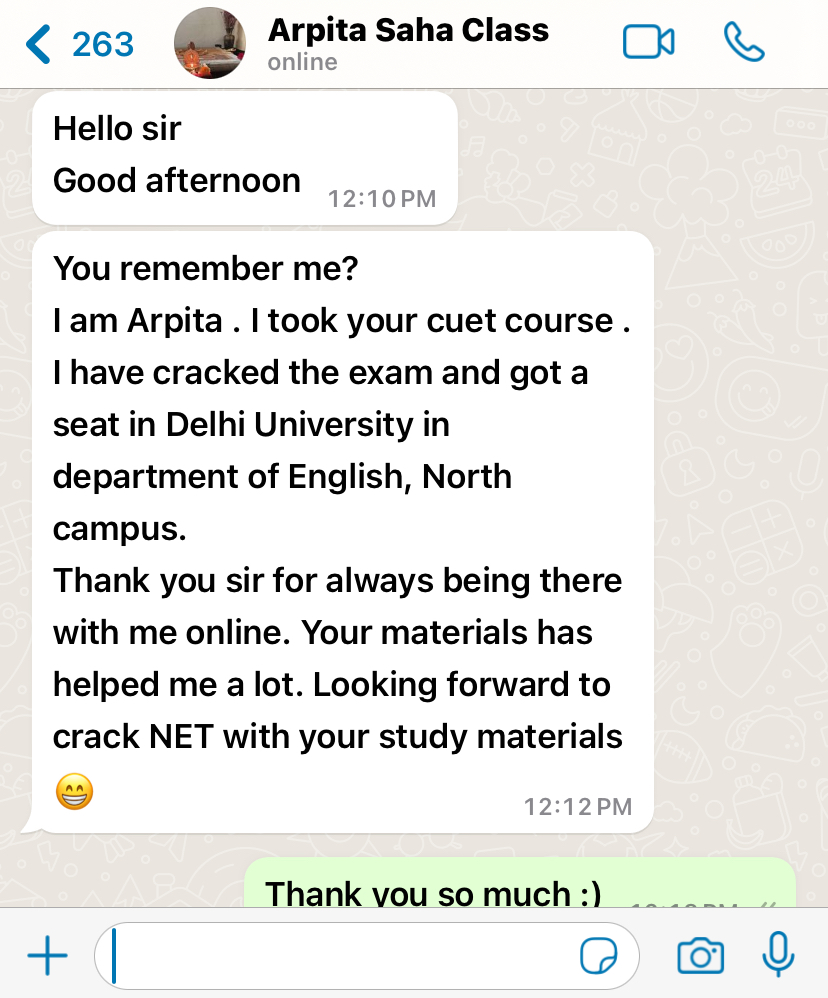
Getting Started: The Application Process
Mark your calendars for late January when the CUET PG application window typically opens. The exam usually takes place in mid-March, giving you ample time to prepare. Remember, early birds have a better chance of snagging their preferred test centers!
In 2024, the examination was conducted on March 13, 2024.
For future reference, here are some:
Application Dates for major universities: –
- Jawaharlal Nehru University – 23rd May to 16th June
- Delhi University – 16th May to 6th June
- English and Foreign Languages University – 26th May to 5th June
- Banaras Hindu Universities – 22nd May to 10th June
- University of Hyderabad – 21st May to 9th June
Previous Year English Papers
CUET English Literature Previous Year Papers
| Exam Year & Details | Download Links |
|---|---|
|
SYLLABUS
CUET Syllabus
Complete syllabus for CUET English Literature
|
Download Syllabus |
|
2025
CUET 2025 English Literature
Latest question paper – 75 questions format
|
Question Paper |
|
2024
CUET 2024 English Literature
Question paper – 75 questions format
|
Question Paper |
|
2023
CUET 2023 English Literature
Paper not available | Pattern changed to 75 questions after 2022
|
Not Available |
|
2022
CUET 2022 English Literature
Last paper with old format
|
Question Paper |
|
2021
CUET 2021 English Literature
Question paper available
|
Question Paper |
|
2018
CUET 2018 English Literature
Earlier format question paper
|
Question Paper |
Struggling with CUET English Literature prep? Our all-in-one package has you covered. Don’t leave your future to chance – get the edge you need today! ” Click here to know more.
🎯 Essential Preparation Strategies
Cracking the Code: Exam Format
CUET PG is a computer-based test that’ll put your knowledge to the test with multiple-choice questions. Here’s what you need to know:
| Total questions: | 75 |
| Maximum score: | 300 points |
| Time limit: | 105 minutes |
| The CUET PG scoring system is straightforward: | |
| Correct answer: | +4 points |
| Incorrect answer: | -1 point |
| Unanswered question: | 0 points |
1. Follow a Chronological Study Approach
Why this matters: Studying literature in order helps you understand how things connect. When you study chronologically, you’ll start seeing patterns and how one period influenced the next. It makes everything easier to remember too.
How to do it: Think of literature like a story that builds up over time. You would not watch a movie series out of order, right? Same logic applies here.
- British Literature: Start with the Anglo-Saxon period, then move to Anglo-Norman, then Medieval, Renaissance, and so on. Each period builds on the previous one. You’ll notice how themes and writing styles changed over time, which makes it much easier to remember.
- Literary Theories: Take feminism as an example. Start with first-wave feminism (women fighting for basic rights), then second-wave (workplace equality), third-wave (diversity focus), and finally fourth-wave (digital activism). This way, you understand the complete journey.
- Any Topic: Whether it’s Romantic poetry or postcolonial literature, always follow the timeline. It’s like learning to walk before you run – you need the basics first.
2. Maintain Steady, Balanced Progress
Don’t rush through British literature – I know it seems huge and you want to finish it quickly, but that’s a mistake many students make. When you rush, you forget everything within a week.
Smart strategy: Instead of spending three months only on British literature, mix things up. Study British literature for two hours, then spend an hour on literary theory, then maybe 30 minutes on Indian literature.
This keeps your brain fresh and helps you remember better. Think of it like a balanced diet – you need different nutrients, not just one type of food all the time.
Also, take breaks! Your brain needs time to process all this information. A steady pace wins the race, not a sprint that leaves you exhausted.
3. Master the Complete Syllabus
Common mistake: Many students skip topics like literary awards and magazines thinking they’re not important. Big mistake! I’ve seen so many students regret this during the actual exam.
Reality check: In CUET PG from 2020-2025, there were questions on literary awards, magazines, and even some regional literature that many students ignored. The examiners love to test these “forgotten” topics because they know most students skip them.
Action plan: Get some guide, or get access to Limitless Literature comprehensive CUET course go through every single topic with a highlighter. Make a checklist and tick off each topic as you cover it. Don’t assume anything is unimportant – if it’s in the syllabus, it can be in the exam.
📚 Practice and Problem-Solving Techniques
4. Solve Previous Year Questions (PYQs) Strategically
Expand your practice beyond CUET PG: Don’t just solve CUET PG papers.
Also practice GATE English Literature, UGC NET English, and SET examinations. Why? Because these exams often have similar question patterns, and practicing more varieties makes you better prepared.
The syllabus remains largely the same across all these competitive exams. While UGC-NET has tougher questions compared to CUET, the core topics are similar – authors like Shakespeare and Marlowe, complete British literature, and other subjects are covered in all exams. The main difference lies in the paper pattern and difficulty level.
Think of it this way: If you’re learning to drive, you don’t practice on just one road, right? You practice on different roads to become a better driver.
Same logic – practice different exam papers to become better at solving English literature questions.
Start with easier papers and gradually move to tougher ones. This builds your confidence and helps you identify your weak areas early.
5. Master the Art of MCQ Analysis
The game-changer: Here’s something most students get wrong – they only study the correct answer and ignore the wrong options. This is a huge missed opportunity!
Example in action:
Q. Which of the following novels is written by Charles Dickens?
- a. Bleak House ✓
- b. Emma
- c. Vanity Fair
- d. Frankenstein
Don’t just memorize that A is correct. Instead, learn about all four options:
See how one question taught you about four different authors? This method turns every question into a mini-lesson. You’ll be surprised how much faster you learn this way.
🌏 Don’t Overlook Indian Literature
6. Indian Literature is Your Secret Weapon
Wake-up call: Many students focus only on British and American literature and completely ignore Indian literature. This is a big mistake! In CUET PG 2025, there were many questions from Indian literature – not just Indian English literature, but also Hindi, Sanskrit, Urdu, Tamil, and other regional literatures.
Here’s the thing: While other students are panicking about these questions, you can score easy marks if you’ve prepared for them. Indian literature questions are often more straightforward than complex British literature analysis questions.
Smart Shortcut for Indian Literature
The solution: Focus on major writers and their famous works. It’s like knowing the greatest hits instead of every song an artist ever made.
Hindi Literature Essentials:
- Premchand: Known as the father of modern Hindi literature. Remember Godaan (his most famous novel) and that he wrote about rural life and social issues.
- Krishna Sobti: Important female Hindi writer. Remember Mitro Marjani as her major work.
- Harivansh Rai Bachchan: Amitabh Bachchan’s father! Remember Madhushala (his most famous work).
Study Formula for any regional literature: Writer’s name + 2-3 major works + one line about what they’re known for. That’s it! Don’t overthink it.
Apply this same formula to Sanskrit (remember Kalidasa), Urdu (remember Ghalib), Tamil literature, and others. Spend just 15-20 minutes on each language, and you’ll cover enough to answer most questions.
🚀 Your Action Plan
Month 1: Start building your foundation. Focus on early British literature periods and basic literary theory. Don’t try to cover everything – just get comfortable with the chronological approach.
Months 2: Start adding 3-4 small subjects like American, Indian, Literary Criticism to your daily routine while continuing British literature.
Months 3 This is your intensive practice phase. Solve lots of previous year questions, take mock tests, and revise everything you’ve learned. Focus on your weak areas during this time.
To make your CUET preparation stress-free, join Limitless Literature CUET Batch! Get instant access to comprehensive lectures, well-organized PDF notes, and complete study materials that cover every topic in the CUET English syllabus. Why waste time searching for resources when everything you need is available in one place? Join now and see the difference.
Daily Schedule Suggestion:
Remember, consistency matters more than long study hours. Studying 3-4 hours daily for 6 months is much better than studying 10 hours daily for 2 months and then burning out.
Special thanks to Manya, Jyotideepa, and Meisam for sharing their CUET PG preparation journeys with us. Our writer Radhika Chawla, who herself secured AIR 7, interviewed these toppers to bring you real advice from students who’ve actually cracked the exam. We believe in students helping students, and these achievers have generously contributed their time and knowledge for your success.
I relied heavily on solving MCQs from previous year papers of CUET-PG. Since there weren’t many papers available (the exam being relatively new), I also solved older UGC-NET English papers. This approach helped me improve my accuracy and build confidence, while strengthening my understanding of the CUET-PG syllabus.
In my opinion, students should be serious about their studies throughout graduation, focusing on clearing concepts step by step. It’s also important to develop a habit of reading widely. When it comes to English Literature, the syllabus can feel endless, so being an avid reader will significantly increase your chances of success in the exam.
Finally, always stay curious and consistent. Let your genuine love for the subject guide your preparation journey. When you study with passion rather than just for marks, the learning becomes much more effective and enjoyable.
-
1. Study Multiple Topics Daily
Instead of finishing one topic completely before moving to the next, I studied multiple areas like Novels, Poetry, and Literary Theory in a single day. This approach works really well if you get bored easily with one subject.Pro tip: This method keeps your brain engaged and prevents study fatigue!
-
2. Choose Comprehensive Books
I followed books that covered each topic in great detail. This helped me remember specific details about people and movements even when I forgot their exact names. During the exam, I could connect information and find the right answers using these details.Details matter more than just memorizing names!
-
3. Stay Consistent with Smart Breaks
I tried my best to stick to the timetable I created, but I also allowed myself breaks to read books I enjoyed. Planning which fun books I’d read during breaks actually made me look forward to following my study schedule.Smart breaks can motivate you to stick to your study plan!
-
1. Pay Attention to Hindi Literature
Even if you’re focusing mainly on English, don’t skip Hindi literature. Questions often come from major authors and literary movements. Learning the basics can give you a real advantage in the exam.
-
2. Know Your Literary Awards
Be familiar with important awards like the Nobel Prize, Booker Prize, and Sahitya Akademi Awards. Know the recent winners, their major works, and why these works are considered important.
-
3. Previous Year Papers Are Your Best Friend
Treat them like mock tests. They help you understand the exam pattern, improve your time management, and most importantly, show you what types of questions come repeatedly.
-
4. Stay Consistent and Study Smart
CUET PG isn’t about cramming everything at the last minute. Create a weekly study plan, stick to it, and revise regularly. Even 2 hours of focused study daily can bring excellent results.
💡 Final Tips for Success
Start early: If you’re reading this, you’re already ahead of many students who start preparation just 1 month before the exam. August-November is the perfect time to begin for the next CUET English exam.
Don’t ignore current affairs: Keep an eye on recent literary awards like Booker Prize, Nobel Prize in Literature, and major literary events. These often appear in current affairs sections.
Take care of yourself: Eat well, sleep enough, and exercise. A healthy body supports a sharp mind. Don’t sacrifice your health for extra study hours – it’s not worth it.
Stay positive: Some days will be harder than others. Some topics will seem impossible to understand. That’s completely normal! Every successful student has felt this way. The key is to keep going and trust the process.
Remember, CUET PG English Literature rewards students who prepare comprehensively, not those who try to guess important topics and skip the rest. Every topic you study properly gives you an advantage over students who took shortcuts.
Ready to start your journey? Work with Limitless Literature CUET English PG Course, make yourself a cup of tea, and begin your adventure through the beautiful world of English literature. Your dream university is waiting for you!
Wrapping Up Strategy
📊 Based on CUET 2024 question paper, we found the distribution of questions in the following order:
| 🗣️ Language and Linguistics | 8 questions |
| 📚 Literary Theory | 7 questions |
| 🌍 Caribbean / African Literature | 5 questions |
| 🎭 British Drama | 7 questions |
| 📖 British Novels | 10 questions |
| ✍️ British Poems | 3 questions |
| (Total: 20 questions from British Literature) | |
| 🇮🇳 Indian Literature | 13 questions |
| 🔄 Comparative Literature | 2 questions |
| 🌎 World Literature | 2 questions |
| 🇺🇸 American Literature | 2 questions |
| 🔍 Literary Criticism | 2 questions |
| 🔤 Translation | 2 questions |
| 🏆 Awards | 2 questions |
| 📄 Unseen Passage | 5 questions |
| 📝 Unseen Poems | 5 questions |
Struggling with CUET English Literature prep? Our all-in-one package has you covered. Don’t leave your future to chance – get the edge you need today! ” Click here to know more.
Career and Academic Paths After CUET PG English Literature
Let’s explore the top 10 career opportunities that await English Literature graduates, organized by different sectors.
📚 Academic and Research Careers
1. Research and PhD
What you’ll do: Dive deep into literary texts, discover new theories, and contribute original research to the field of literature.
The path: After completing your MA, pursue a PhD in English Literature. As an SRF/JRF qualifier, you’ll receive excellent benefits, including Rs. 35,000 per month funding during your PhD.
What comes next: With a PhD, you can work in university education, government think tanks, or policy research organizations. Exciting new fields like AI and literature, and digital humanities are creating fresh research opportunities.
Perfect for: Students who love analyzing literature, enjoy academic writing, and want to contribute new knowledge to the field.
2. Professorship
What you’ll do: Teach literature to undergraduate and graduate students while conducting your own research.
The path: During your final year of MA, appear for the UGC NET examination. Once you clear NET, you can apply for Assistant Professor positions in colleges and universities. With experience, you can advance to Associate Professor and eventually Professor.
Perfect for: Those who enjoy teaching, mentoring students, and staying connected to academic life.
✍️ Writing and Media Careers
3. Publishing Industry
What you’ll do: Work behind the scenes to bring books to readers as an editor, literary agent, publishing manager, or content developer.
Skills you’ll need: Learn editing techniques, understand the publishing process, and build connections in the industry. Start with internships at publishing houses to gain experience.
Perfect for: Book lovers who want to help authors improve their work and bring great stories to the world.
4. Journalism and Mass Media
What you’ll do: Work as a feature writer, news reporter, copywriter, or content producer for newspapers, magazines, TV channels, or digital platforms.
Skills you’ll need: Strong writing and speaking skills are essential. Practice news writing, interviewing techniques, and public speaking. Apply for internships at news organizations like BBC, The Print, or local newspapers.
Perfect for: People who love staying updated with current events and enjoy communicating news to the public.
5. Digital and Content Writing
What you’ll do: Create engaging content for websites, blogs, social media, and online platforms.
Skills you’ll need: Learn SEO (Search Engine Optimization), digital storytelling, and how to engage online audiences. Understand different content formats like blogs, social media posts, and web copy.
Perfect for: Tech-savvy writers who enjoy creating content for the digital world.
🎬 Entertainment and Creative Industries
6. Entertainment Industry
What you’ll do: Write scripts for movies, TV shows, web series, or theater productions. You can also work in film criticism, dialogue writing, dubbing, or subtitling.
Opportunities include: Screenwriting, scriptwriting, dialogue writing, film criticism, playwriting, dubbing, and subtitling for platforms like Netflix, Amazon Prime, and production houses like Yash Raj Films.
Perfect for: Creative writers who love storytelling and want to see their words come to life on screen or stage.
7. Translation and Interpretation
What you’ll do: Bridge language barriers by translating books, movies, documents, or providing real-time interpretation services.
Opportunities include: Literary translations (novels, poems), subtitling for streaming platforms, dubbing for international content, and real-time interpretation at conferences and international events.
Skills you’ll need: Fluency in English plus at least one other language, cultural understanding, and attention to detail.
Perfect for: Multilingual individuals who enjoy working with different languages and cultures.
🏢 Corporate and Training Sectors
8. Communication and Soft-Skills Training
What you’ll do: Train employees in companies to improve their communication skills, presentation abilities, and professional etiquette.
Skills you’ll need: Public speaking, email writing, interview coaching, and presentation skills. Many companies hire external trainers to improve their employees’ communication abilities.
Perfect for: Confident speakers who enjoy helping others improve their professional skills.
9. IELTS/TESOL/TEFL/CELTA Training
What you’ll do: Teach English as a second language to non-native speakers preparing for international exams like IELTS, TOEFL, or for general English improvement.
Skills you’ll need: Teaching methodology, cultural sensitivity, language assessment skills, and patience. You’ll need certification in TESOL, TEFL, or CELTA.
Perfect for: Patient teachers who enjoy working with international students and helping them achieve their English language goals.
🚀 Entrepreneurship and Creative Business
10. Creative Entrepreneurship
What you’ll do: Start your own business combining literature knowledge with entrepreneurial skills.
Business ideas include:
- Book reviewing services
- Literature podcasts
- Content consultancy
- SEO content agencies
- Audiobook narration
- Literary merchandise design
- Online literature courses
- Writing workshops
Perfect for: Self-motivated individuals who want to be their own boss while staying connected to literature.
💡 Getting Started: Practical Tips
During Your MA:
- Build a portfolio of your writing samples
- Start internships in your areas of interest
- Network with professionals in your chosen field
- Develop both traditional and digital skills
- Consider learning additional languages
After Graduation:
- Apply for entry-level positions or internships
- Continue learning through online courses
- Join professional associations in your field
- Build an online presence (LinkedIn, portfolio website)
- Stay updated with industry trends
Final Thoughts
The world needs passionate literature graduates now more than ever. With content consumption at an all-time high and new media platforms emerging constantly, your skills in analysis, writing, and communication are incredibly valuable.
Remember, you don’t have to choose just one path. Many successful professionals combine multiple areas – like teaching part-time while freelance writing, or working in publishing while building a content business on the side.
The key is to start somewhere, gain experience, and gradually build the career that excites you most. Your literature background has given you critical thinking, communication skills, and cultural awareness – exactly what today’s job market values.
Ready to start your post-CUET PG journey? Pick the path that excites you most and take the first step today with Limitless Literature CUET English Batch