
If you are preparing for UGC NET English Literature, Kamala Das is one author you cannot afford to ignore.
She appears in the Indian Writing in English section of the syllabus and NTA has consistently asked questions about her poems, autobiography, and her position as a confessional poet.
This post breaks down exactly what you need to study, which works get tested most often, and how to avoid the common mistakes students make on Kamala Das questions.
Why Kamala Das is important for UGC NET English Literature
Kamala Das (1934–2009) falls under Unit IX (Indian Writing in English) of the UGC NET English Literature syllabus.
She is one of the most frequently tested Indian English poets, and questions about her have appeared in nearly every NET exam cycle over the past five years.
You can verify this yourself by checking the Indian Literature previous year questions on our site.
NTA treats Kamala Das as a high-weightage author for two reasons. First, she writes across genres — poetry, prose fiction, and autobiography — which gives examiners multiple angles to frame questions from.
Second, her confessional style connects to broader literary theory questions about feminist writing, postcolonial identity, and the politics of language.
A single Kamala Das question can test your knowledge of Indian literature, literary movements, and critical theory all at once.
Expect 2–4 questions directly or indirectly related to Kamala Das in any given NET paper. That is enough to make or break your qualifying score.
Major works you must know (with dates)

NTA loves testing chronology and associating the right work with the right author. Here is every Kamala Das work that has appeared in or is likely to appear in UGC NET questions:
Poetry Collections:
- Summer in Calcutta (1965) — her debut collection, the one examiners test most
- The Descendants (1967)
- The Old Playhouse and Other Poems (1973)
- The Anamalai Poems (1985)
- Only the Soul Knows How to Sing (1996)
Individual Poems You Must Know:
- “An Introduction” (from Summer in Calcutta, 1965) — the single most tested Kamala Das poem
- “My Grandmother’s House” — frequently asked, tests nostalgia and loss themes
- “The Looking Glass” — asked in the context of gender dynamics
- “The Old Playhouse” — marriage and patriarchy themes
- “The Freaks” — physical love without emotional connection
- “The Dance of the Eunuchs” — social outsiders and marginalization
Prose:
- My Story (1976) — autobiography, originally written in Malayalam as Ente Katha
- Alphabet of Lust (1977) — novel
- Padmavati the Harlot and Other Stories (1992) — short story collection
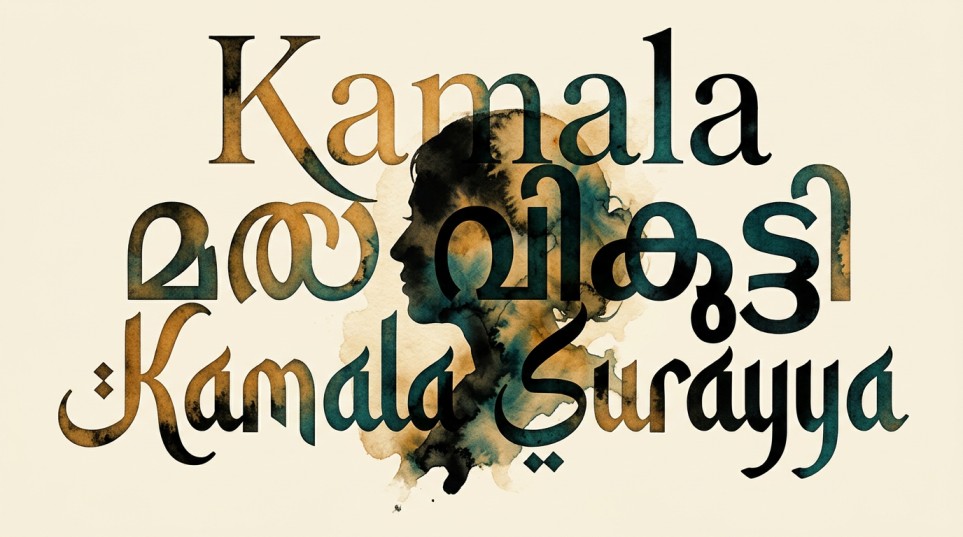
Pen names to remember: She wrote in English as Kamala Das and in Malayalam as Madhavikutty.
After converting to Islam in 1999, she adopted the name Kamala Surayya. NTA has tested all three names in MCQs. Know them cold.
Key themes and concepts tested in UGC NET English Literature
When you are practising subject-wise English Literature previous year questions, you will notice that Kamala Das questions cluster around a few recurring themes:
1. Confessional Poetry Kamala Das is called the “mother of modern Indian English poetry” and India’s foremost confessional poet.
NTA often asks you to identify which Indian poet is considered confessional — the answer is almost always Kamala Das. Her confessional mode draws comparisons with Sylvia Plath and Anne Sexton, and examiners sometimes test this comparison directly.
2. The Body and Female Sexuality Unlike her contemporaries, Das wrote explicitly about the female body, desire, and sexual experience.
Poems like “The Freaks” and “The Looking Glass” deal with the gap between physical intimacy and emotional fulfillment. This theme is tested both in identification questions (“Which poem deals with…”) and in thematic analysis MCQs.
3. The Politics of Language “An Introduction” contains the famous lines about speaking three languages, writing in two, and dreaming in one.
Das’s choice to write in English rather than Malayalam, and her defense of that choice against critics who called her writing “not real Indian poetry,” is a recurring exam topic. NTA frames these as questions about postcolonial identity and linguistic choice.
4. Marriage and Patriarchy “The Old Playhouse” is the key poem here. It describes marriage as a cage where the woman’s identity is slowly erased.
The poem uses the metaphor of a playhouse (theatre) that has become old and abandoned — the woman’s selfhood has been consumed by the husband’s demands.
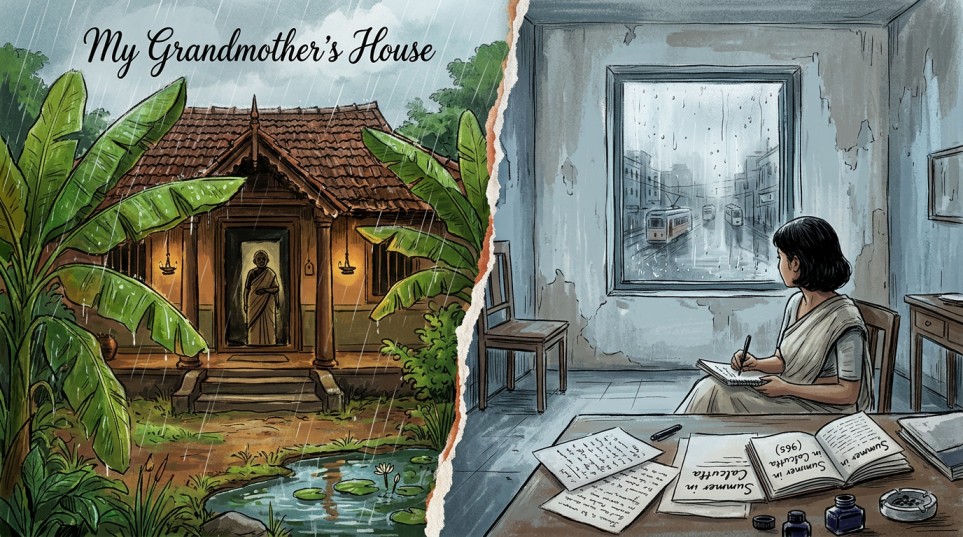
5. Nostalgia and Loss “My Grandmother’s House” is the anchor poem for this theme. The grandmother’s house represents unconditional love, safety, and belonging.
After the grandmother’s death, the house “withdraws into silence” — and the speaker is left begging for love “at strangers’ doors.”
This poem is straightforward to understand but tricky in MCQ form because NTA tests specific images and lines.
Poem-by-poem breakdown for UGC NET
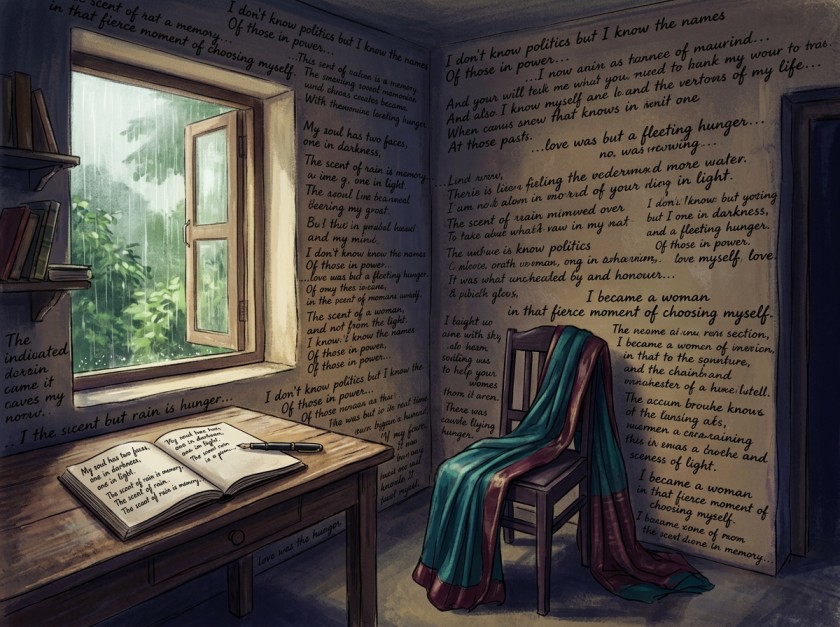
“An Introduction” The most important Kamala Das poem for any competitive exam. The speaker rebels against being told how to behave, what language to use, and what identity to perform.
She lists the roles imposed on her — wife, mother, woman — and rejects them all. The poem ends with her asserting that she is “every woman who seeks love.”
Key line for MCQs: “I am Indian, very brown, born in Malabar.”
Another frequently tested line: “Don’t write in English, they said, English is not your mother-tongue.” Remember that this poem appeared in Summer in Calcutta (1965), not in The Descendants.
“My Grandmother’s House” A short, powerful poem about returning to the grandmother’s house after her death.
The house is now dark and silent, filled with snakes (literally and symbolically). The speaker contrasts the unconditional love she received from her grandmother with the transactional nature of love she finds elsewhere.
The last lines — “I who have lost my way and beg now at strangers’ doors to receive love, at least in small change” — are among the most quoted in Indian English poetry and have appeared in UGC NET matching questions.
“The Old Playhouse” A poem about how marriage destroys the woman’s independent identity. The husband is compared to a “swallow” who has built a nest inside the playhouse, making it impossible for anything else to exist there.
The woman had dreams, curiosity, and a sense of self before marriage — all of it was replaced by the husband’s “skin” and needs. NTA typically asks about the central metaphor or the feminist reading of this poem.
“The Looking Glass” Advice from an older woman to a younger one about how to keep a lover. The poem is ironic — the “advice” is essentially to surrender completely, to “stand nude before the looking glass with him.”
Das uses this surface instruction to expose the power imbalance in heterosexual relationships. Watch out for MCQs that frame this poem as pro-submission; the correct reading identifies the irony.
“The Freaks” A poem about a sexual encounter that is physically present but emotionally empty. The “freaks” of the title refers to both the lovers and the act itself — something performed mechanically, without connection. The heart is described as “an old cat, dull, and spent.” This poem connects to Das’s broader theme that physical love without emotional intimacy is meaningless.
Common exam traps and how to avoid them
Trap 1: Confusing pen names. Students mix up Kamala Das (English writing name), Madhavikutty (Malayalam pen name), and Kamala Surayya (name after conversion to Islam in 1999). All three refer to the same person. If an MCQ lists “Madhavikutty” as an option for a question about Indian English poetry, it is correct — that is Kamala Das.
Trap 2: Wrong collection attribution. “An Introduction” belongs to Summer in Calcutta (1965), not The Old Playhouse and Other Poems (1973). NTA tests this directly. Students often guess the wrong collection because both are well-known.
Trap 3: Calling her a Romantic poet. Kamala Das is a confessional poet, not a Romantic one. Yes, she writes about emotions, love, and personal experience — but confessional poetry is a post-WWII movement associated with self-disclosure, psychological rawness, and breaking taboos. The Romantic movement is something entirely different. If an MCQ asks you to classify Das, always choose “confessional.”
Trap 4: Misreading “The Looking Glass” as literal advice. The poem uses irony. It is not a sincere guide to pleasing a man. The correct interpretation is feminist critique. NTA examiners know this distinction and frame options accordingly.
Trap 5: Ignoring the autobiography. My Story (1976) is tested almost as often as her poetry. Know that it was originally written in Malayalam (Ente Katha), that Das later admitted to mixing fiction with fact in it, and that it caused a massive controversy in Kerala when published. Questions about My Story often appear in the prose/non-fiction section of the paper, not the poetry section.
How to study Kamala Das for UGC NET in 5 days
If you are short on time, here is a focused plan that covers the highest-weightage material first. For a broader preparation strategy, check out this guide on 5 things to do 40 days before UGC NET English Literature exam.
Day 1: Read “An Introduction” and “My Grandmother’s House” carefully. These two poems account for the majority of Kamala Das questions. Read them at least twice. Note specific lines, images, and the central argument of each poem. Write down the collection name and year for both.
Day 2: Read “The Old Playhouse,” “The Looking Glass,” and “The Freaks.” Focus on identifying the central metaphor and the feminist reading of each. Make flashcards for the key image in each poem.
Day 3: Study My Story (1976). You do not need to read the entire autobiography — read a detailed summary and focus on the controversy it caused, the fact that it mixes fact and fiction, and its significance as an act of female self-disclosure in Indian literature. Note the original Malayalam title.
Day 4: Solve previous year questions. Go through the previous year question papers and filter for Kamala Das questions. You will quickly see the patterns. Our study material for UGC NET English Literature includes topic-wise MCQs that cover all major Kamala Das poems.
Day 5: Revise pen names, dates, and traps. Make a one-page cheat sheet with: all three names, all poetry collection titles with dates, the five common traps listed above, and the key line from each poem. Review it twice — morning and evening.
Previous year question patterns for Kamala Das in UGC NET
Based on an analysis of recent UGC NET papers, including the June 2025 question paper and the December 2025 topic-wise breakdown, here is how NTA frames Kamala Das questions:
Pattern 1: Identify the poet from a quoted line. NTA gives you a line (usually from “An Introduction” or “My Grandmother’s House”) and asks you to identify the poet. This is straightforward if you have read the poems.
Pattern 2: Match poem to collection. A matching question where you connect poems to their poetry collections. This is where students lose marks because they mix up Summer in Calcutta and The Old Playhouse and Other Poems.
Pattern 3: Thematic identification. “Which of the following poets is known for confessional poetry in Indian English Literature?” The answer is Kamala Das. Variations include asking about feminist poetry, autobiographical poetry, or poetry about the female body.
Pattern 4: Factual recall about My Story. Questions about the original language (Malayalam), the year of publication (1976), or the controversial reception. Sometimes paired with questions about other Indian autobiographies.
Pattern 5: Comparative questions. “Kamala Das has been compared to which Western poet?” The expected answer is Sylvia Plath (sometimes Anne Sexton). These questions test your knowledge of the confessional poetry tradition across national literatures.
For more practice with these question types, explore our 4000+ subject-wise previous year questions organized by author and topic.
Preparing for UGC NET English Literature? Our course covers Kamala Das and 50+ other high-weightage authors with video lectures, topic-wise MCQs, and 13 physical booklets delivered to your door. Learn more about the course here.