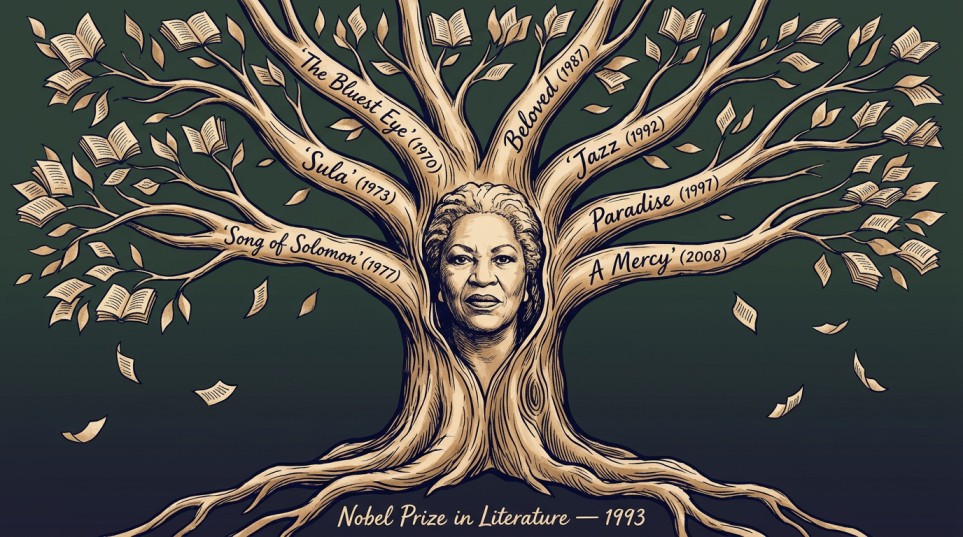
If you are preparing for UGC NET English Literature, Toni Morrison is one of the most frequently tested American authors on the exam.
NTA has asked questions on her novels, her critical essays, and her Nobel Prize acceptance speech across multiple years.
She sits right at the intersection of African American literature, postcolonial studies, and feminist criticism, which means questions about her can appear in at least three different units of the syllabus.
This guide breaks down everything you need to know about Morrison for the exam, with specific focus on what NTA actually tests.
Toni Morrison (1931–2019), born Chloe Ardelia Wofford in Lorain, Ohio, was the first African American woman to win the Nobel Prize in Literature (1993).
She won the Pulitzer Prize for Fiction in 1988 for Beloved. Her work sits in Unit IX (American Literature) and often overlaps with Unit X (New Literatures) of the UGC NET English syllabus.
Why Toni Morrison is important for UGC NET English Literature
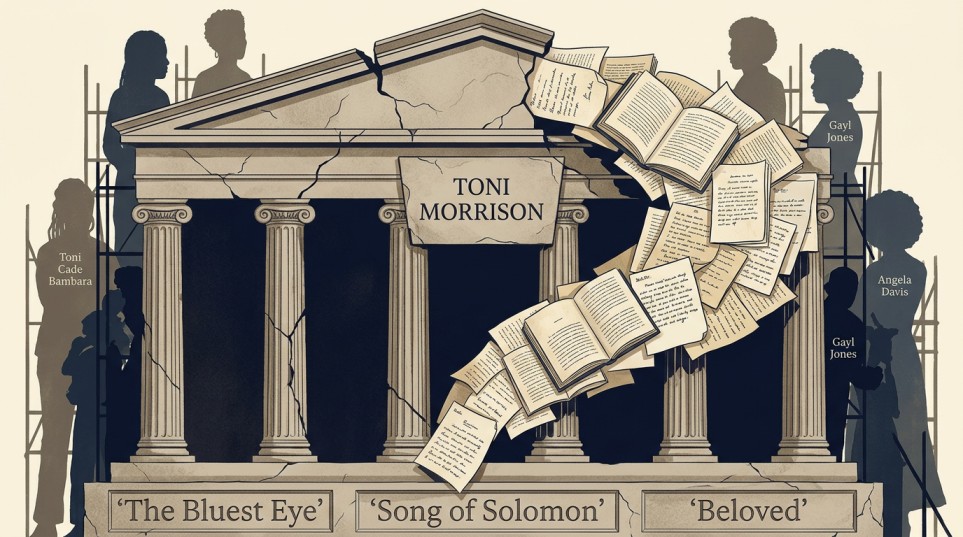
Morrison appears in the American Literature section of the UGC NET English Literature syllabus, but her reach goes well beyond that single unit. Here is why she keeps showing up on the exam:
She is the only African American woman Nobel Laureate in Literature. NTA loves testing Nobel Prize facts.
They will ask you the year (1993), the reason (her body of fiction work), and whether she was the first black author (she was not — Wole Soyinka won in 1986, but she was the first black woman).
If you are also studying Chinua Achebe for UGC NET, you will notice overlapping themes of colonial trauma and racial identity between these two writers.
Her novel Beloved is one of the most heavily tested single texts in American Literature.
Questions range from plot-level details (who is Beloved? what happened at 124 Bluestone Road?) to thematic analysis (memory, rememory, motherhood under slavery) to literary technique (non-linear narrative, magical realism, stream of consciousness).
Her critical work Playing in the Dark: Whiteness and the Literary Imagination (1992) has appeared in questions about literary criticism.
This text introduced the concept of “Africanism” in American literature and is directly relevant to Unit VII (Literary Criticism and Theory).
Major works you must know (with dates)
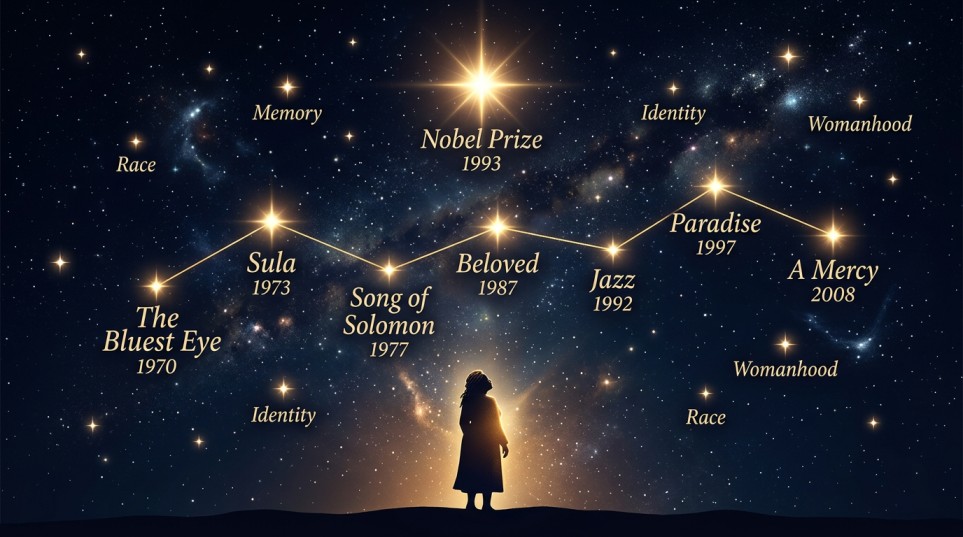
NTA tests chronological order frequently. Memorise this list:
- The Bluest Eye (1970) — her debut novel about Pecola Breedlove, a young black girl who wants blue eyes
- Sula (1973) — friendship between two black women in a small Ohio town
- Song of Solomon (1977) — Milkman Dead’s search for identity and family roots; won the National Book Critics Circle Award
- Tar Baby (1981) — race and class tensions on a Caribbean island
- Beloved (1987) — based on the true story of Margaret Garner, a formerly enslaved woman; Pulitzer Prize 1988
- Jazz (1992) — set in 1920s Harlem; second part of the Beloved trilogy
- Paradise (1997) — an all-black town in Oklahoma; third part of the trilogy
- Love (2003) — revolves around a deceased hotel owner and the women in his life
- A Mercy (2008) — set in 1680s America, explores early forms of slavery before racial categories hardened
- Home (2012) — a Korean War veteran returns to a racist America
- God Help the Child (2015) — her final novel, about colourism within the black community
The trilogy to remember: Beloved → Jazz → Paradise. NTA has tested this grouping.
Critical works: Playing in the Dark: Whiteness and the Literary Imagination (1992) and The Origin of Others (2017). Both deal with race, otherness, and American literary tradition.
Key themes and concepts tested in UGC NET English Literature
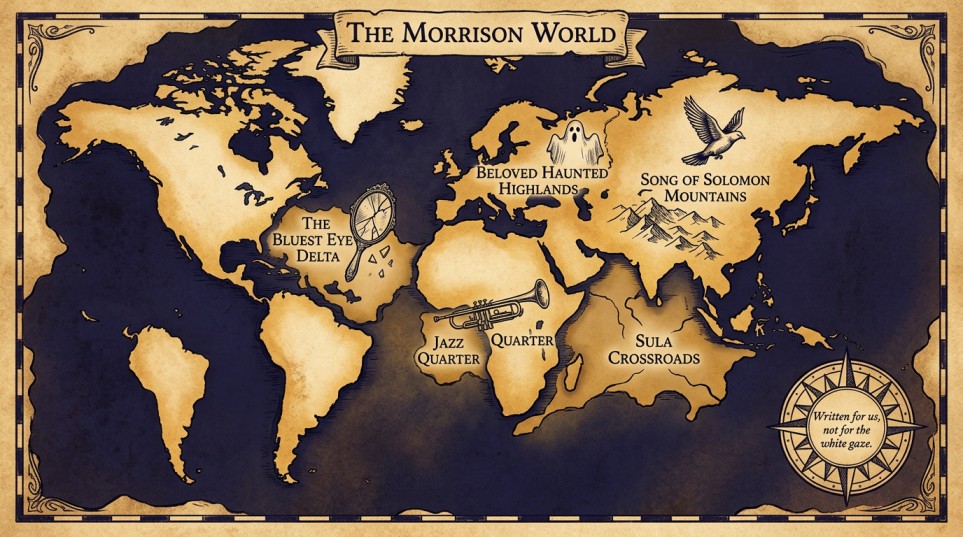
These are the specific ideas NTA frames MCQs around when testing Toni Morrison for UGC NET English Literature. Know them cold.
Rememory (not just “memory”). Morrison coined this term in Beloved. Rememory means that traumatic memories exist independently of the person who experienced them. They linger in places and can be experienced by others. This is different from simple flashback or reminiscence. If an MCQ gives you options like “nostalgia,” “flashback,” “rememory,” and “recollection” in the context of Beloved, the answer is rememory.
The Middle Passage and slavery’s afterlife. Beloved is not just a historical novel about slavery. It is about what happens after slavery ends, when the trauma does not. The ghost of Beloved represents the collective memory of the 60 million who died during the Middle Passage. Morrison dedicated the novel “to the Sixty Million and more.”
Africanism. In Playing in the Dark, Morrison argued that canonical American authors like Hemingway, Poe, and Melville constructed their ideas of freedom, individualism, and whiteness by using black characters as a dark backdrop. She called this the “Africanist presence” in American literature. This concept is testable in the Literary Criticism unit.
Motherhood and infanticide. Sethe kills her daughter in Beloved rather than let her return to slavery. NTA tests whether students understand this as an act of love, resistance, or both. The real-life inspiration was Margaret Garner (1856).
Community vs. individual. Nearly every Morrison novel explores what happens when an individual breaks from their community. Sula is cast out. Milkman Dead leaves and returns. The women of Ruby in Paradise attack outsiders. This tension is a reliable exam question.
Magical realism. Morrison blended realistic historical settings with supernatural elements. Beloved is literally a ghost who takes physical form. Milkman’s ancestor could fly. NTA may ask you to identify Morrison’s narrative technique, and “magical realism” or “mythic realism” is usually the correct answer.
Colourism and beauty standards. The Bluest Eye directly addresses how white beauty standards destroy black self-image. Pecola Breedlove’s desire for blue eyes is the central symbol. God Help the Child revisits colourism within the black community itself.
Novel-by-novel breakdown for exam preparation
You do not need to read all eleven novels. Here is what to prioritise based on previous year question patterns:
Beloved (1987) — must read, highest weightage
Set in 1873 in Cincinnati, Ohio. Sethe, a formerly enslaved woman, lives at 124 Bluestone Road with her daughter Denver.
The house is haunted by the ghost of Sethe’s dead baby. Paul D, another formerly enslaved man from Sweet Home plantation, arrives and disrupts the haunting. A young woman named Beloved appears, who seems to be the reincarnation of the dead child.
Key facts NTA tests: the address (124 Bluestone Road), the epigraph (“Sixty Million and more”), the concept of rememory, the schoolteacher’s dehumanising measurements of Sethe, the “tree” scar on Sethe’s back (actually whipping scars), and Baby Suggs’ preaching in the Clearing.
The Bluest Eye (1970) — high priority
Morrison’s first novel. Narrated partly by Claudia MacTeer, it tells the story of Pecola Breedlove, who believes she is ugly because she is black and prays for blue eyes.
Her father Cholly Breedlove assaults her. The novel opens with a distorted Dick-and-Jane primer passage, which NTA has referenced in questions about narrative technique.
Key facts: the Dick-and-Jane repetition as structural device, the marigold seeds as symbol, the Shirley Temple cup, and the novel’s setting in Lorain, Ohio (Morrison’s own hometown).
Song of Solomon (1977) — medium priority
Milkman Dead traces his family history from Michigan back to Virginia. His aunt Pilate (born without a navel) guides his journey.
The novel ends with Milkman leaping from a cliff, echoing the myth of flying Africans. NTA tests the flying African motif and the significance of names in this novel.
Playing in the Dark (1992) — important for criticism unit
Three lectures Morrison delivered at Harvard (the William E. Massey Sr. Lectures in the History of American Civilization). She examines how white American authors used blackness as a tool for defining whiteness.
If you are studying for the Literary Criticism section, this is mandatory reading alongside Edward Said’s Orientalism and Gayatri Spivak’s work.
Common exam traps and how to avoid them
Trap 1: Confusing the Nobel Prize year with the Pulitzer year. Pulitzer = 1988 (for Beloved). Nobel = 1993 (for lifetime body of work). NTA has given these as separate options in the same question.
Trap 2: Saying Morrison was the first black Nobel Laureate. She was the first black woman. Wole Soyinka (Nigeria) won in 1986. If both names appear in a “first African American Nobel” question, read carefully whether it says “woman” or not.
Trap 3: Misidentifying the Beloved trilogy order. The correct order is Beloved (1987) → Jazz (1992) → Paradise (1997). Students often swap Jazz and Paradise because they do not sound obviously connected.
Trap 4: Calling Beloved a “historical novel.” While it is set in the past, Morrison herself called it a work about memory, not history. The correct genre identification is usually “neo-slave narrative” or a novel combining magical realism with historical fiction. Straight “historical novel” is usually the wrong option.
Trap 5: Attributing “stream of consciousness” exclusively to Morrison. While Morrison uses interior monologue heavily (especially in Beloved‘s middle section), her primary technique is better described as “non-linear narrative” or “fragmented narrative.” Stream of consciousness is more associated with Woolf and Joyce. NTA uses this distinction to test your precision.
How to study Toni Morrison in 5 days (exam strategy)
If you are preparing in the final weeks before the exam, here is a focused plan:
Day 1: Beloved deep dive. Read a detailed summary and analysis of Beloved. Focus on plot, characters (Sethe, Denver, Paul D, Baby Suggs, Beloved, Schoolteacher), and the concept of rememory. Memorise the dedication and the address.
Day 2: The Bluest Eye and Song of Solomon. Read summaries of both novels. For The Bluest Eye, focus on the Dick-and-Jane device and Pecola’s character. For Song of Solomon, focus on Milkman Dead, Pilate, and the flying African myth.
Day 3: Playing in the Dark and critical concepts. Read a summary of all three lectures. Understand Africanism, the Africanist presence, and how Morrison critiques Hemingway and Poe. Connect this to your Literary Criticism preparation.
Day 4: Remaining novels overview. Skim plot summaries of Sula, Tar Baby, Jazz, Paradise, A Mercy, Love, Home, and God Help the Child. You need one-line knowledge of each. Focus on the trilogy structure and A Mercy (early American slavery without racial categories).
Day 5: MCQ practice and revision. Solve previous year questions from the American Literature section that mention Morrison. Revise dates, awards, and the five common traps listed above. Test yourself on chronological order of all eleven novels.
Previous year question patterns
NTA frames Morrison questions in several predictable ways. Based on analysis of past UGC NET English papers:
Chronological ordering: “Arrange the following Morrison novels in order of publication.” This tests whether you know that The Bluest Eye (1970) came before Sula (1973) came before Song of Solomon (1977). Memorise the full list with dates.
Match the following: “Match the novel with its central character.” Expect pairings like Beloved → Sethe, Song of Solomon → Milkman Dead, The Bluest Eye → Pecola Breedlove, Sula → Sula Peace.
Concept identification: “The term ‘rememory’ was coined by which author?” or “Which Morrison novel deals with the concept of Africanism?” These are direct recall questions.
Award questions: “Which novel won Toni Morrison the Pulitzer Prize?” Answer: Beloved. They may also ask about the National Book Critics Circle Award (Song of Solomon).
Trilogy identification: “Which three novels form Toni Morrison’s trilogy?” NTA expects you to know Beloved, Jazz, and Paradise are connected through themes of love and African American history across different time periods.
For more practice with American Literature questions, work through the complete subject-wise PYQ collection available on our site. You can also review the full UGC NET study material for structured preparation across all units.
Preparing for UGC NET English Literature? Our course covers Toni Morrison and 50+ other high-weightage authors with video lectures, topic-wise MCQs, and 13 physical booklets delivered to your door. Learn more about the course here.