Most students who quote “Night of the Scorpion” in a UGC NET answer describe it as a poem about faith healing village life.
That reading misses the point NTA is actually testing.
Ezekiel is writing as an outsider watching his mother’s neighbours perform ritual after ritual while she lies in pain, and the poem’s power comes from irony and detachment, not endorsement of the rituals.
Get that wrong and you will mismatch the poem with its tone in a paper-2 question. Nissim Ezekiel for UGC NET English Literature preparation means understanding exactly this kind of gap between what a poem describes and what it actually means, because NTA builds its trickiest options around that gap.

Why Nissim Ezekiel is important for UGC NET English Literature
Ezekiel sits in the Indian Writing in English unit of the syllabus, and within that unit he is one of the two or three most reliably tested poets, alongside Kamala Das and A.K. Ramanujan.
Call him the founder of the tradition — modern Indian English poetry effectively starts with his 1952 debut collection, and every anthology that covers the field opens with him.
You can check the pattern for yourself in the Indian Literature previous year questions archive, where his name recurs across multiple exam cycles.
He was born in Bombay on 16 December 1924 and died there on 9 January 2004, and that Bombay address matters for the exam.
Ezekiel’s poetry is inseparable from the city — its crowds, its half-English speech, its middle-class rented flats — and NTA questions often test whether you can connect a poem to this specific urban, secular, ironic sensibility rather than to the pastoral or devotional modes that dominate a lot of other Indian English poetry from the same decades.
Expect at least one direct question on Ezekiel in most NET cycles, sometimes two, plus indirect questions that group him with other Indian English poets in “which of the following” formats.
He also comes up in questions about literary journals and the Bombay poetry scene of the 1950s and 60s, since he edited and shaped that scene as much as he wrote in it.
Major works you must know (with dates)
- A Time to Change (1952) — his first collection, published while he was still in London
- Sixty Poems (1953) — self-published after his return to Bombay
- The Third (1959)
- The Unfinished Man (1960) — widely considered his first mature collection, written after a period of near-silence
- The Exact Name (1965) — contains “Night of the Scorpion” and “Poet, Lover, Birdwatcher”
- Hymns in Darkness (1976)
- Latter-Day Psalms (1982) — won the Sahitya Akademi Award in 1983
- Collected Poems 1952–1988 (1989, Oxford University Press India)
NTA likes to test the sequence and pairing of these titles, not just the fact that Ezekiel wrote them.
A common trap is mixing “The Exact Name” with a title by another Bombay-school poet in a multiple-select question. Learn the order, not just the list.
He also worked as an art critic, edited the journal Quest, and taught English literature for years at Mithibai College in Bombay. He received the Padma Shri in 1988. None of that biographical detail alone earns marks, but it explains why questions sometimes frame him as an institution-builder for Indian English writing, not just a poet.

Key themes and concepts tested in UGC NET
Irony and detachment. Ezekiel almost never states an emotion directly. He describes a scene — his mother writhing from a scorpion sting, a tour group being marshalled by an officious guide, a farewell speech full of grammatical slips — and lets the irony do the work.
Questions frequently ask you to identify the poem’s tone, and “ironic” or “detached” is usually the safer answer over “sentimental” or “devotional.”
Urban, secular sensibility. Unlike Tagore’s spiritual lyricism or the pastoral strain in some Indian English verse, Ezekiel writes about middle-class Bombay life: rented rooms, office routines, dinner parties, buses.
If a passage-based question gives you an unfamiliar Ezekiel poem, look for these markers rather than nature imagery.

Exile and return. Ezekiel spent nearly four years in London (1948–1952) before returning to India, and this experience of leaving and coming back — and choosing to stay despite the pull of the West — runs through “Background, Casually” and several other poems.
Questions on postcolonial identity in Indian English poetry often anchor on this theme through Ezekiel specifically.

“Indian English” as comic and critical device. Poems like “Goodbye Party for Miss Pushpa T.S.” and “The Very Indian Poem in Indian English” (also referred to as “The Patriot”) use deliberately broken, Indianized English syntax.
Students sometimes read these as mocking Indian speakers. The more defensible critical reading, and the one NTA options tend to reward, is that Ezekiel is documenting and gently satirizing a real register of English while also finding real poetic material in it — not simply making fun of it.

Formal control. Ezekiel favoured tight stanzas, controlled meter, and revision-heavy craft, in contrast to poets who leaned on free verse or confessional sprawl.
Exam questions on his style sometimes ask you to distinguish him from Kamala Das on exactly this axis — her poems read as raw and confessional, his read as controlled and ironic even when the subject is personal, like his mother’s illness in “Night of the Scorpion.”
Poem-by-poem breakdown
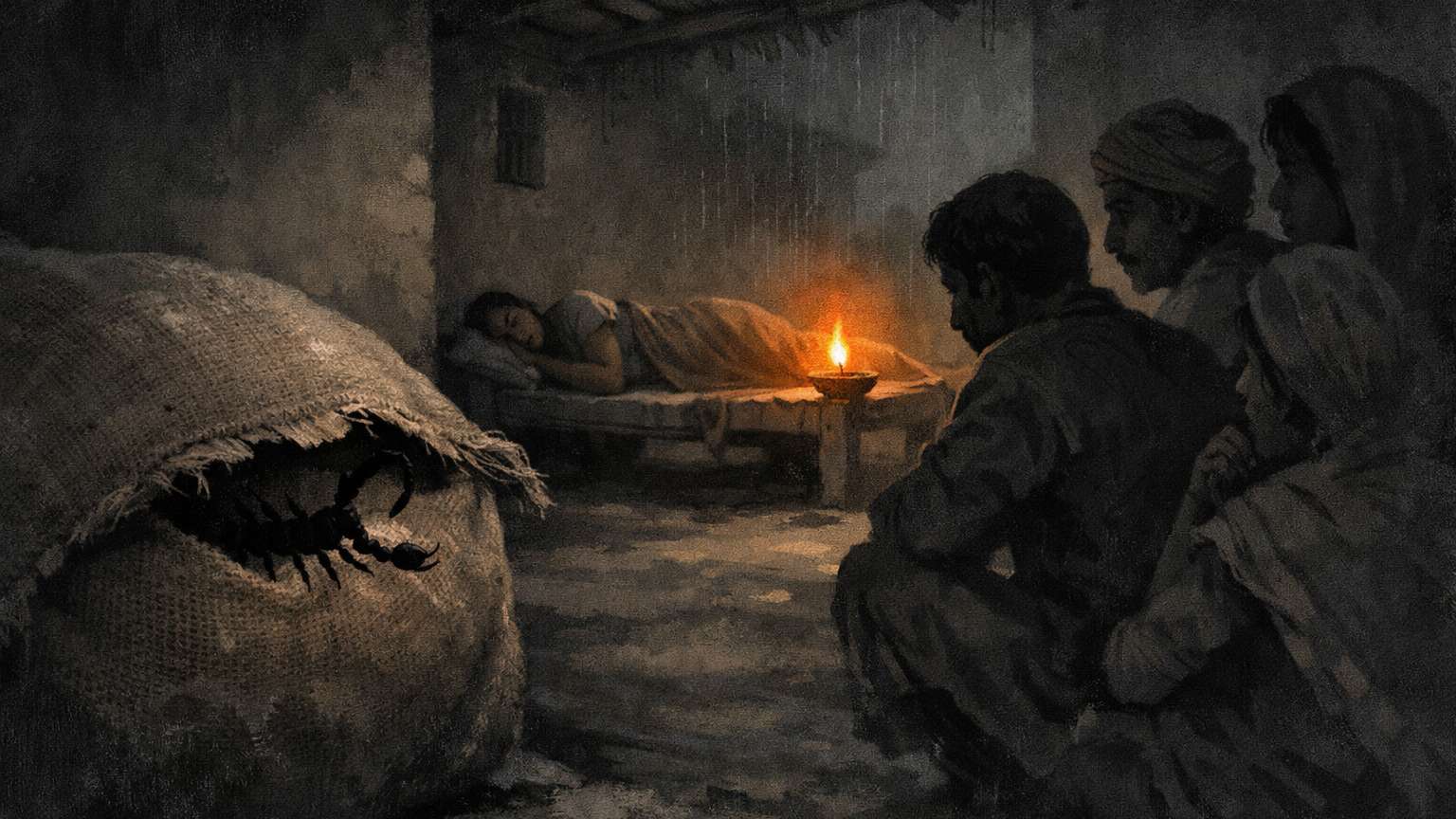
“Night of the Scorpion” — His most anthologized poem. A scorpion stings the speaker’s mother; the poem alternates between the frantic, half-superstitious response of the villagers (“May the sins of your previous birth / be burned away tonight”) and the mother’s own understated relief that the children were spared.
The final line, where the mother says only that she is grateful the scorpion chose her and not her children, delivers the poem’s real emotional weight in plain, unsentimental language. NTA has drawn questions from the closing lines specifically, so know them, not just the setup.
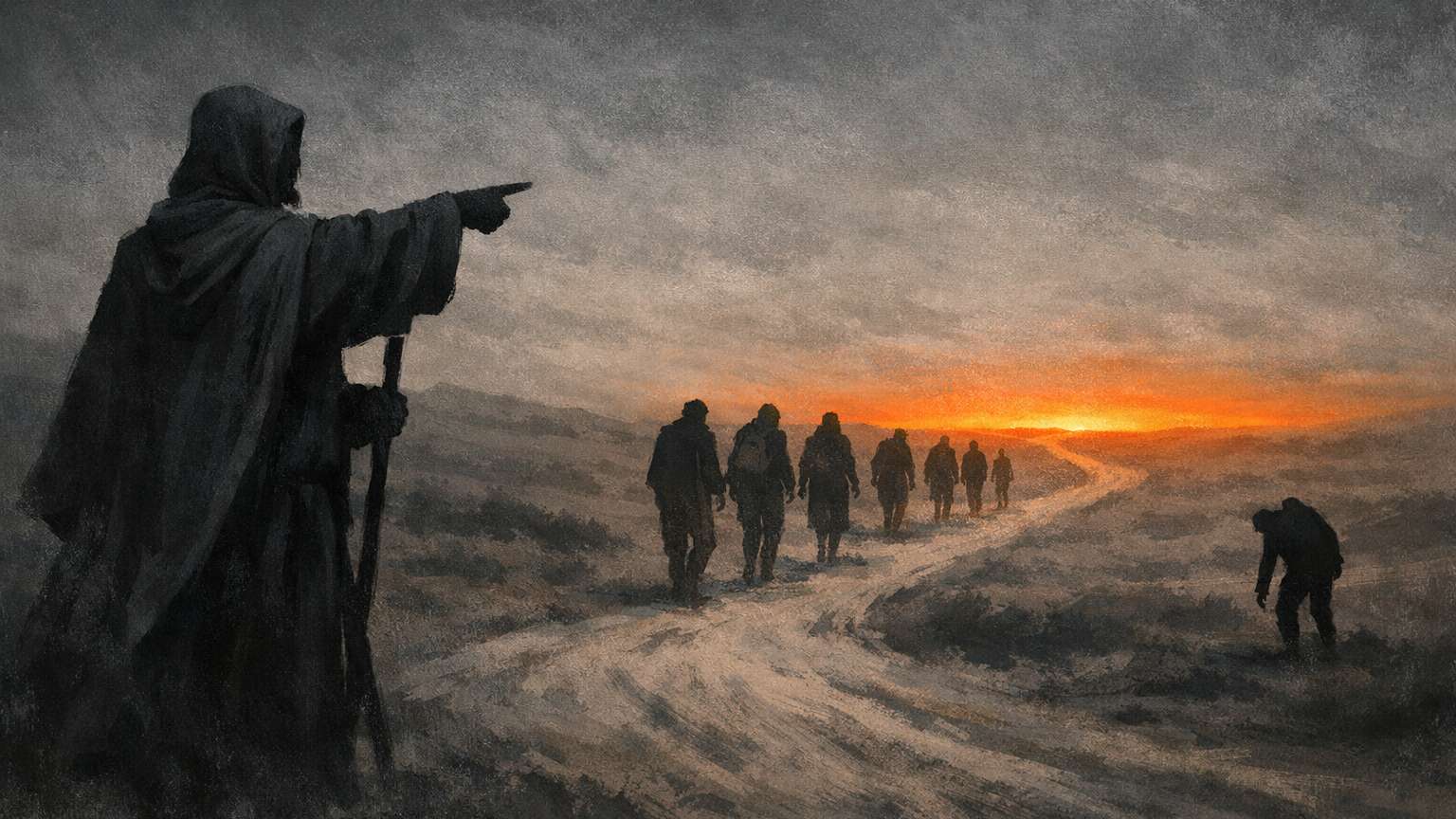
“Enterprise” — An allegory of a pilgrimage or journey that gradually loses its purpose: some travellers turn back, one is lost, the guide grows tyrannical, and by the end the survivors realize the destination barely mattered compared to the journey itself.
Read it as a comment on collective ambition and disillusionment, useful for questions that ask you to identify allegorical or symbolic Indian English poems.
“Background, Casually” — Ezekiel’s most autobiographical long poem, tracing his Jewish-Indian upbringing in Bombay, his years in England, and his decision to return and make peace with being “a Jew among Hindus” and “an Indian among Jews.”
This is the poem to cite for questions on identity, belonging, and diaspora in Indian English poetry.

“Goodbye Party for Miss Pushpa T.S.” and “The Patriot” — Dramatic monologues in stylized Indian English, spoken by characters rather than the poet himself.
Do not confuse the speaker’s voice with Ezekiel’s own opinions; questions sometimes test whether you understand these as persona poems.

“Poet, Lover, Birdwatcher” — A meditation on patience and readiness, comparing the discipline needed to watch birds, love well, and write poetry.
Frequently tested for its closing metaphor about waiting “for the goddess to come” rather than chasing her.

Common exam traps and how to avoid them
- Reading “Night of the Scorpion” as pro-ritual or devotional. It is ironic and secular in outlook. The speaker observes the village’s faith-based response without sharing it.
- Confusing Ezekiel’s persona poems with his own voice. “Goodbye Party for Miss Pushpa T.S.” is spoken by a character using broken English, not Ezekiel writing carelessly. Options that call this “Ezekiel’s poor grasp of English” are wrong by definition — he was a formally trained, meticulous craftsman.
- Mixing up his collection titles with Kamala Das’s or A.K. Ramanujan’s. All three are Indian Writing in English staples and questions frequently test “who wrote which title” in a shared list. Memorize the exact pairing of title and author, not just the fact that all three are “Indian English poets.”
- Placing him in the wrong decade. His major creative period runs from the early 1950s to the mid-1960s, with later collections like “Hymns in Darkness” (1976) and “Latter-Day Psalms” (1982) extending the body of work but not changing his core style much. Don’t assume a late title means late-career stylistic change — it doesn’t, for Ezekiel.
- Treating “Enterprise” as a straightforward travel poem. It’s allegorical. Questions testing symbolism will penalize a literal reading.
How to study Nissim Ezekiel in 5 days (exam strategy)
Day 1: Read “Night of the Scorpion,” “Enterprise,” and “Background, Casually” in full, twice each. Note tone shifts and the final lines of each — that’s where NTA draws options from most often.
Day 2: Learn the collection list with dates cold. Make flashcards: title, year, one distinguishing fact (e.g., “The Exact Name, 1965, contains Night of the Scorpion”).
Day 3: Study the two persona poems — “Goodbye Party for Miss Pushpa T.S.” and “The Patriot” — and write one line for yourself distinguishing persona from poet’s own voice. This single distinction resolves several trap questions.
Day 4: Read a batch of solved MCQs and past questions on Ezekiel. Compare your instinctive answer against the correct one every time you get something wrong, and note the pattern.
Cross-check against the subject-wise previous year questions collection for the widest sample.
Day 5: Do a full revision pass covering Ezekiel alongside Kamala Das, since NTA frequently tests both in the same paper and likes to test the contrast between his ironic control and her confessional directness.
If you haven’t already, revise our Kamala Das guide back to back with this one.
Previous year question patterns
NTA questions on Ezekiel fall into a few repeatable types: matching a poem title to its correct theme or closing line, identifying the correct publication year or collection for a given poem, distinguishing Ezekiel’s stated position from a persona poem’s voice, and grouping questions that ask you to pick “which of the following poets belongs to the Bombay poetry scene of the 1950s–60s.”
The 2025 UGC NET English detailed breakdown shows how consistently Indian Writing in English questions appear across recent cycles, and the June 2025 question paper and December 2025 topic-wise breakdown are worth solving specifically for how they phrase Ezekiel options.
For a broader run at past papers, work through the previous year question papers hub rather than relying on a single cycle — Ezekiel questions repeat certain themes (irony, the scorpion poem’s closing lines, persona vs. poet) across multiple years, so pattern recognition across papers pays off more than memorizing any single paper.
Preparing for UGC NET English Literature? Our course covers Nissim Ezekiel and 100+ other high-weightage authors with video lectures, topic-wise MCQs, and 13 physical booklets delivered to your door. Learn more about the course here.