
Michel Foucault never wrote a book of literary criticism in the way Eliot or Leavis did.
He trained as a philosopher and historian, spent his career studying prisons, asylums, and clinics, and barely touched the English literary canon.
Yet UGC NET tests him almost every cycle, sometimes with two or three questions in a single paper.
That gap between what Foucault actually wrote and how often NTA asks about him is exactly why students under-prepare for him — they assume a “philosopher” is optional and lose marks that were sitting right there in the Literary Criticism and Theory unit.
The reason he keeps showing up is simple: his ideas about power, knowledge, and discourse reshaped how English departments read every text after 1970.
New Historicism borrows his method wholesale. Postcolonial theory leans on his account of how institutions produce “truth.”
Even Edward Said’s Orientalism opens by naming Foucault as a direct influence. If you’re preparing for UGC NET English Literature, treating Foucault as a footnote is the mistake this guide is meant to fix.
Why Foucault is important for UGC NET
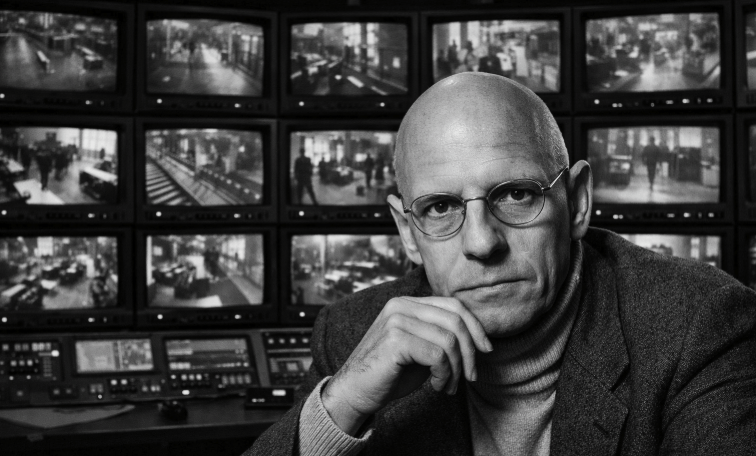
Foucault sits in the Literary Theory and Criticism unit, usually filed under Structuralism, Post-Structuralism, or New Historicism depending on how a given paper’s setters group the syllabus.
He is not confined to one box, and that is precisely why he is high-yield: examiners can pull a question on him from the theory section, from a New Historicism question, or from a postcolonial question that name-drops him as a source for Said or Homi Bhabha.
Check the 2025 UGC NET English detailed breakdown to see how heavily the paper weights Literary Theory relative to period-based questions — it is consistently one of the highest-scoring sections if you prepare the core theorists properly.
Expect one to two direct questions on Foucault most cycles, and he almost always appears bundled with other names — Derrida for the poststructuralist cluster, Said for the postcolonial application of his ideas, and sometimes Roland Barthes when the question turns on authorship.
If you’ve already studied Jacques Derrida for UGC NET English Literature, don’t stop there — Foucault and Derrida get confused constantly in MCQs because both attack fixed, stable meaning, even though they arrive at it from different directions.
Foucault asks who controls what counts as knowledge; Derrida asks how language itself destabilizes meaning. Keep that distinction sharp and you’ll avoid at least one common trap.
Major works you must know (with dates)

NTA loves chronology questions on Foucault because his career maps neatly onto a sequence of institutions he studied one after another. Learn this order, not just the titles:
- Madness and Civilization (1961) — his first major work, a history of how “madness” was defined and confined differently across eras, from the medieval leper colonies to the modern asylum
- The Birth of the Clinic (1963) — traces the emergence of modern medicine and the “medical gaze,” the idea that doctors learned to see the body as a site of disease rather than a whole person
- The Order of Things (1966), French title Les Mots et les Choses — his structuralist-adjacent study of how different historical periods (epistemes) organize knowledge differently; this is the book that made him famous, though Foucault himself rejected the “structuralist” label
- The Archaeology of Knowledge (1969) — his methodological statement, where he lays out how discourse operates and introduces terms like “discursive formation”
- “What Is an Author?” (1969) — a short essay, delivered first as a lecture, that argues the “author” is not a person but a function that discourse uses to limit and organize meaning; this is the single most frequently tested Foucault text in UGC NET English because it sits directly in literary studies
- Discipline and Punish: The Birth of the Prison (1975) — his best-known book for English literature students, tracing the shift from public torture to modern surveillance-based discipline; introduces the Panopticon
- The History of Sexuality, Volume 1: An Introduction (1976, English translation 1978) — argues that sexuality is not repressed by power but produced and multiplied by it; introduces the concept of biopower
Foucault was born on October 15, 1926, in Poitiers, France, and died on June 25, 1984, in Paris.
NTA has asked direct date-of-birth and date-of-death questions before, so don’t skip the biographical bookends even though the theory matters more.
Key themes and concepts tested in UGC NET

Power/knowledge. Foucault’s central claim is that power and knowledge are not separate — power produces knowledge, and knowledge exercises power.
This is different from the older idea that knowledge is neutral and power simply suppresses or distorts it.
NTA frequently tests this exact distinction: expect an MCQ that offers “knowledge is repressed by power” as a tempting wrong answer against the correct “power and knowledge produce each other.”
Discourse. For Foucault, discourse is not just language — it is a system of statements, rules, and institutional practices that decides what can be said, by whom, and what counts as true within a given field at a given time.
Psychiatry, criminology, and medicine are all discourses in this sense. Questions on discourse often test whether you understand it as productive (it creates subjects and objects of knowledge) rather than merely descriptive.
The Panopticon. Foucault takes Jeremy Bentham’s 18th-century prison design — a circular building with a central watchtower, where inmates can never tell if they’re being watched — as the model for how modern power works.
The point is not that everyone is watched all the time; it’s that the possibility of being watched makes people discipline themselves. This self-surveillance is what Foucault calls the internalization of power, and it’s the concept students misquote most often in exams.
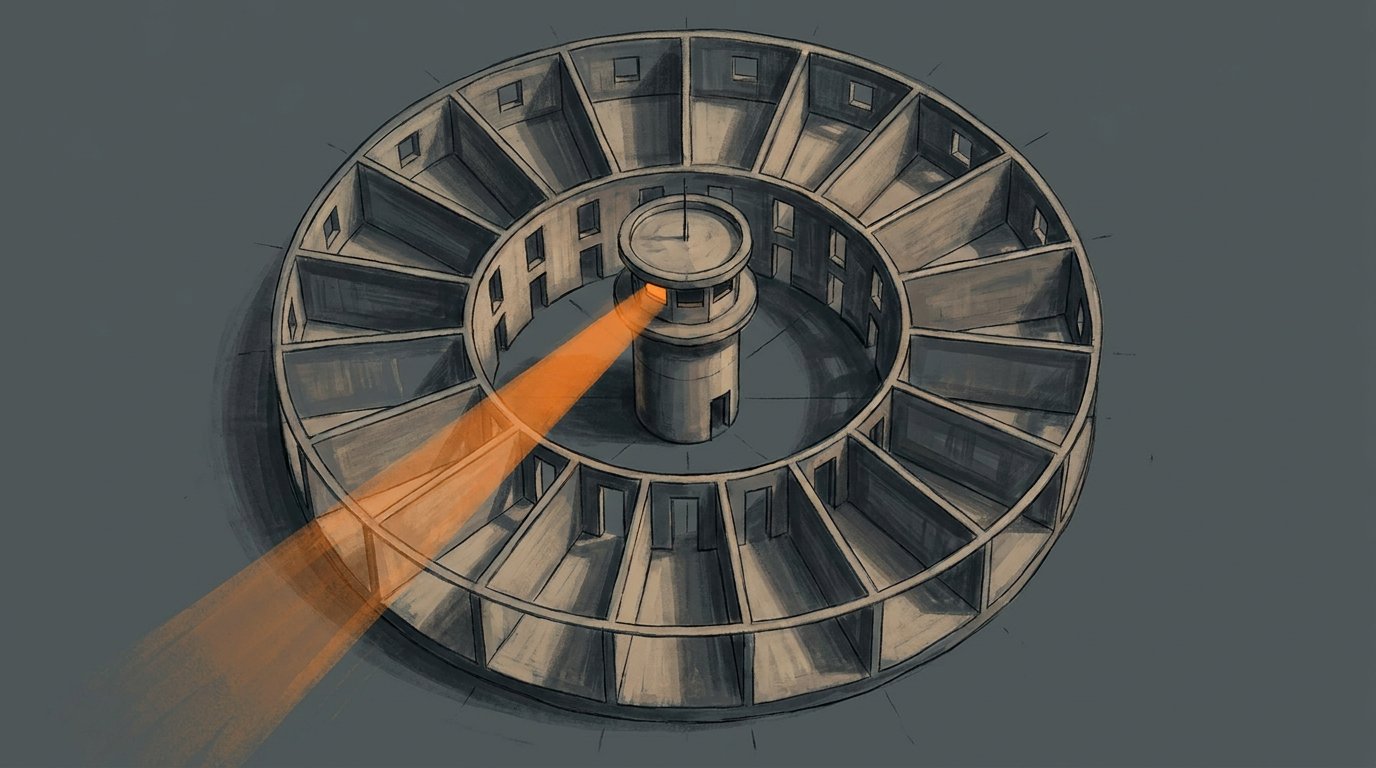
Docile bodies. Discipline and Punish argues that modern institutions — schools, factories, prisons, armies — produce “docile bodies,” bodies trained through repetition, timetables, and surveillance to be productive and obedient. This concept regularly appears alongside questions on the Panopticon.
Biopower and biopolitics. From The History of Sexuality onward, Foucault argues that modern power doesn’t just punish individuals — it manages populations through statistics, public health, and demography. This is biopower: power exercised over life itself, not just over individual bodies.

The author function. In “What Is an Author?”, Foucault argues the author’s name is not a biographical fact but a classificatory device — it groups texts together, establishes their status, and limits how freely they can be interpreted.
This essay is frequently paired in questions with Roland Barthes’s “The Death of the Author” (1967), and NTA likes testing whether students know these are related but distinct arguments: Barthes declares the author dead to free the reader; Foucault asks what work the “author” concept still does even after that death.

Foucault concept by concept: what to actually memorize
Rather than trying to read all seven major works cover to cover with limited time, prioritize in this order:
- “What Is an Author?” — shortest, most literature-adjacent, most frequently tested
- Discipline and Punish — Panopticon, docile bodies, surveillance; the concept cluster with the widest reach across other theorists
- Power/knowledge as a general framework — this underlies almost every other Foucault question, so understanding it well lets you eliminate wrong answers even on works you haven’t read closely
- The History of Sexuality Vol. 1 — biopower, repressive hypothesis
- The Order of Things and Archaeology of Knowledge — lowest priority for English literature papers specifically, since these lean more philosophical and historical, but keep the dates and the term “episteme” ready

Common exam traps and how to avoid them
Trap 1: Confusing Foucault’s discourse with Derrida’s deconstruction. Both attack the idea of stable, objective meaning, but Foucault’s discourse is about institutions and social power, while Derrida’s deconstruction is about the internal instability of language and text. If a question mentions “institutions,” “surveillance,” or “the clinic,” it’s Foucault. If it mentions “differance,” “trace,” or “logocentrism,” it’s Derrida.
Trap 2: Treating the Panopticon as literal surveillance technology. Students sometimes answer as if Foucault is describing CCTV cameras. He is using Bentham’s 18th-century architectural design as a metaphor for how power operates through the possibility of being watched, not through constant, literal observation. Questions testing this nuance usually have a wrong answer that’s too literal.
Trap 3: Mixing up “What Is an Author?” with “The Death of the Author.” These are two different essays by two different theorists (Foucault, 1969; Barthes, 1967) that share a target — the traditional idea of the author as the sole source of a text’s meaning — but reach different conclusions. Barthes wants to liberate the reader; Foucault wants to analyze what function “author” performs in discourse, even after Barthes’s declaration.
Trap 4: Assuming Foucault believed power is only oppressive. A recurring MCQ trap presents “power is always negative and repressive” as an answer choice. Foucault’s actual argument is that power is productive — it creates subjects, knowledge, and truth, not just restrictions. This is one of his most tested and most misunderstood points.
Trap 5: Getting the chronology of his major works wrong. Students often place Discipline and Punish before The Order of Things, or assume The History of Sexuality came first because it deals with a more “obvious” literature-adjacent topic. Fix the sequence in your head: Madness and Civilization (1961) → Birth of the Clinic (1963) → Order of Things (1966) → Archaeology of Knowledge (1969) → Discipline and Punish (1975) → History of Sexuality Vol. 1 (1976).
How to study Foucault in 5 days (exam strategy)
Day 1: Read a solid summary of “What Is an Author?” and note the argument in your own words — author as function, not person. This is your highest-probability topic.
Day 2: Cover Discipline and Punish — the shift from spectacle punishment to disciplinary power, the Panopticon, docile bodies. Draw the Panopticon diagram from memory; it helps the concept stick.
Day 3: Learn power/knowledge and discourse as a pair. Write out the distinction between Foucault’s view (power produces knowledge) and the older liberal view (power represses knowledge) — this single distinction resolves most MCQ traps.
Day 4: Cover The History of Sexuality Vol. 1 — biopower, the “repressive hypothesis” he argues against. Then revise the full works-with-dates list until you can recite it without checking.
Day 5: Solve every previous year question you can find on Foucault, Derrida, and Said together, since they cluster in papers. Cross-check your answers against the literary criticism previous year questions page and note which specific sub-concept you got wrong, not just the right answer.
If your exam is more than five days out, don’t compress the schedule — spread these same five blocks across a week and add a day for revision of Foucault alongside Said, since the two are tested together often enough to justify studying them back to back.
If you haven’t already, read Edward Said for UGC NET English Literature right after finishing this, since Said’s Orientalism explicitly borrows Foucault’s discourse analysis and applies it to how the West represents the East.
Previous year question patterns
NTA tends to test Foucault in three recurring formats. The first is a straight definition-matching question: a term like “Panopticon,” “docile bodies,” or “biopower” is given, and you match it to Foucault among four theorist options.
The second is a quote-attribution question, often pulling a line from “What Is an Author?” or Discipline and Punish and asking you to identify the source or the correct interpretation.
The third, more advanced format, asks you to distinguish Foucault’s position from a closely related theorist — usually Derrida, Barthes, or Said — testing whether you understand the conceptual boundary between them rather than just recognizing names.
Go through the subject-wise previous year questions collection and isolate every question that mentions power, discourse, surveillance, or authorship — these are your Foucault-adjacent questions even when his name isn’t in the stem.
For a broader look at how full papers are structured and where theory questions typically land, the previous year question papers archive is worth working through end to end, not just for Foucault but for spotting the pattern of how NTA clusters theorists across a single paper.
For readers who want a primary academic source on Foucault’s biography and intellectual context beyond exam prep, the Stanford Encyclopedia of Philosophy entry on Foucault is a reliable, citable reference.
Preparing for UGC NET English Literature? Our course covers Michel Foucault and 50+ other high-weightage authors and theorists with video lectures, topic-wise MCQs, and 13 physical booklets delivered to your door. Explore the study material for UGC NET English Literature here.