“Wandering between two worlds, one dead, / The other powerless to be born.” That line, from “Stanzas from the Grande Chartreuse,” is the single best entry point into why NTA keeps testing Matthew Arnold.
He wrote it about religious doubt in 1855, standing between a fading Christian certainty and a scientific age that hadn’t yet given him anything to replace it with.
But the line also describes Arnold’s own position in English literary history, caught between Romantic feeling and Victorian doubt, between poetry and criticism, between the old classical standards and a modern age he thought was losing them.
For UGC NET English Literature, that in-between position is exactly what makes him high-yield: he shows up in the Romantic-to-Victorian poetry unit and in the Literary Criticism unit, sometimes in the same paper.
Most students prepare Arnold as “the Dover Beach poet” and stop there, memorizing one poem and one metaphor about a retreating sea.
That gets you through maybe one question. NTA draws from his criticism just as often, sometimes more, because “The Study of Poetry” and “Culture and Anarchy” introduced vocabulary — touchstone, disinterestedness, Hebraism, Hellenism, sweetness and light — that examiners can turn into matching questions, fill-in-the-blank quotes, and “who coined this term” MCQs almost indefinitely.
This guide covers both halves properly.
Why Matthew Arnold is important for UGC NET
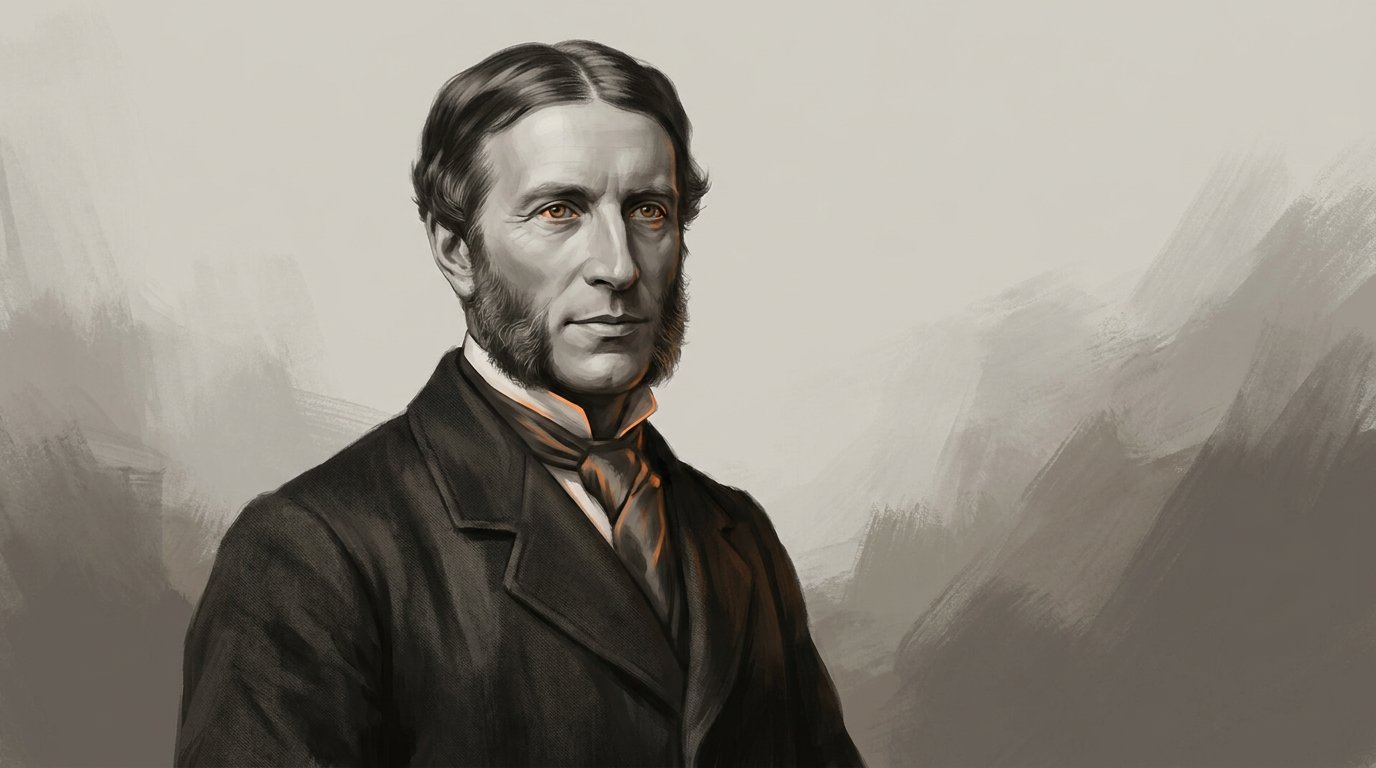
Arnold sits in two different places in the syllabus at once. As a poet, he belongs to the Victorian period (Unit covering 1830–1900), usually grouped with Tennyson and Browning even though his temperament and subject matter are closer to the Romantics who came before him.
As a critic, he belongs squarely in the Literary Criticism and Theory unit, where he’s treated as the founder of a certain kind of Anglo-American criticism that runs all the way down to T.S. Eliot and the New Critics.
Check the 2025 UGC NET English detailed breakdown if you want to see how much weight the paper gives to Literary Criticism relative to period poetry — it’s consistently one of the sections where a small, well-targeted list of theorists pays off disproportionately, and Arnold is on that list every cycle.
Expect one to two questions on his poetry (usually “Dover Beach,” sometimes “The Scholar-Gipsy” or “Sohrab and Rustum”) and one to two more on his criticism (touchstones, disinterestedness, or Hebraism and Hellenism).
If you’ve already worked through T.S. Eliot for UGC NET English Literature, you have a head start here — Eliot wrote a famous, fairly harsh essay simply titled “Matthew Arnold” in The Use of Poetry and the Use of Criticism (1933), and NTA occasionally tests that link directly, asking which later critic evaluated Arnold’s legacy.
Keep that connection in mind; it’s a cheap extra mark if the question comes up.
Major works you must know (with dates)
Arnold’s career runs in a fairly clean sequence — poetry first, criticism later — and NTA rewards students who know that shift and the dates around it.
- The Strayed Reveller, and Other Poems (1849) — his first collection, published anonymously under the initial “A.”
- Empedocles on Etna, and Other Poems (1852) — includes the long dramatic poem “Empedocles on Etna,” which Arnold himself withdrew from his next collection
- Poems (1853) — the famous 1853 Preface explains why he dropped “Empedocles on Etna”: he argued that modern subjects showing “a continuous state of mental distress” without a clear course of action fail to give the reader the pleasure poetry should provide. This collection also introduced “Sohrab and Rustum” and “The Scholar-Gipsy”
- Poems, Second Series (1855) — includes “Balder Dead” and “Stanzas from the Grande Chartreuse”
- Merope (1858) — a classical Greek-style verse tragedy, rarely tested but occasionally shows up in “which is NOT a poem by Arnold” trick options
- New Poems (1867) — includes “Thyrsis,” his elegy for Arthur Hugh Clough, and “Dover Beach,” which was actually written around 1851 but published here for the first time
- On Translating Homer (1861) — his early lectures as Oxford Professor of Poetry
- Essays in Criticism, First Series (1865) — contains “The Function of Criticism at the Present Time”
- Culture and Anarchy (1869) — his most quoted prose work, source of Hebraism/Hellenism and sweetness and light
- Literature and Dogma (1873) — applies his critical method to religion, arguing the Bible should be read as literature
- Essays in Criticism, Second Series (1888, published posthumously) — contains “The Study of Poetry,” the essay that introduces the touchstone method
Arnold was born on December 24, 1822, in Laleham, Middlesex, the son of Thomas Arnold, the reforming headmaster of Rugby School.
He was educated at Rugby and Balliol College, Oxford, worked as a government schools inspector for 35 years, and served as Oxford’s Professor of Poetry from 1857 to 1867 — the first person to lecture in that role in English rather than Latin.
He died suddenly of a heart attack on April 15, 1888, in Liverpool, which is why his second essay collection appeared after his death.
Key themes and concepts tested in UGC NET
The touchstone method. In “The Study of Poetry,” Arnold proposes testing any new poem by comparing it against short passages from acknowledged masters — Homer, Dante, Shakespeare, Milton — held in the mind as a standard.
A poem that can’t stand next to these “touchstones” without collapsing lacks what he calls “high seriousness.”
This is the concept students confuse most often with T.S. Eliot’s objective correlative, so keep them separate: Arnold’s touchstones judge quality by comparison to past masterpieces; Eliot’s objective correlative is about how emotion gets expressed through concrete images within a single poem.
Different critics, different centuries, different jobs.

Poetry as a criticism of life. Also from “The Study of Poetry,” Arnold’s definition: poetry is “a criticism of life under the conditions fixed for such a criticism by the laws of poetic truth and poetic beauty.”
NTA likes to test the full phrase, especially the second half, because students who only remember “criticism of life” drop marks on fill-in-the-blank questions asking what conditions Arnold attaches to it.
Disinterestedness. From “The Function of Criticism at the Present Time,” Arnold argues criticism must stay free of “the practical view of things” — free from political, religious, or personal interest — in order “to see the object as in itself it really is.”
This essay also contains his claim that criticism has to prepare the ground before great creative literature can flourish, reversing the usual assumption that criticism is secondary to creation.

Hebraism and Hellenism. Culture and Anarchy‘s central pairing, and one of the most reliably tested ideas in the whole criticism syllabus.
Hebraism is “strictness of conscience” — doing, obeying, moral conduct. Hellenism is “spontaneity of consciousness” — seeing things clearly as they really are, valuing intellect and beauty. Students very commonly flip these two definitions under exam pressure, so anchor them with the H’s: Hebraism = “how must I behave,” Hellenism = “how do I see.”

Sweetness and light. Also from Culture and Anarchy, Arnold’s phrase (borrowed from Jonathan Swift’s Battle of the Books) for what culture pursues: beauty (“sweetness”) and intelligence (“light”). He defines culture itself as “the pursuit of our total perfection by means of getting to know, on all the matters which most concern us, the best which has been thought and said in the world.”
Barbarians, Philistines, Populace. Arnold’s famous three-class division of Victorian England in Culture and Anarchy: the Barbarians (the aristocracy, valuing manners and physical vigor), the Philistines (the middle class, valuing commerce and narrow moralism), and the Populace (the working class, still finding its voice). The exam sometimes tests which class Arnold associates with which trait, so don’t just memorize the three names.

Matthew Arnold’s poetry and criticism: a work-by-work breakdown
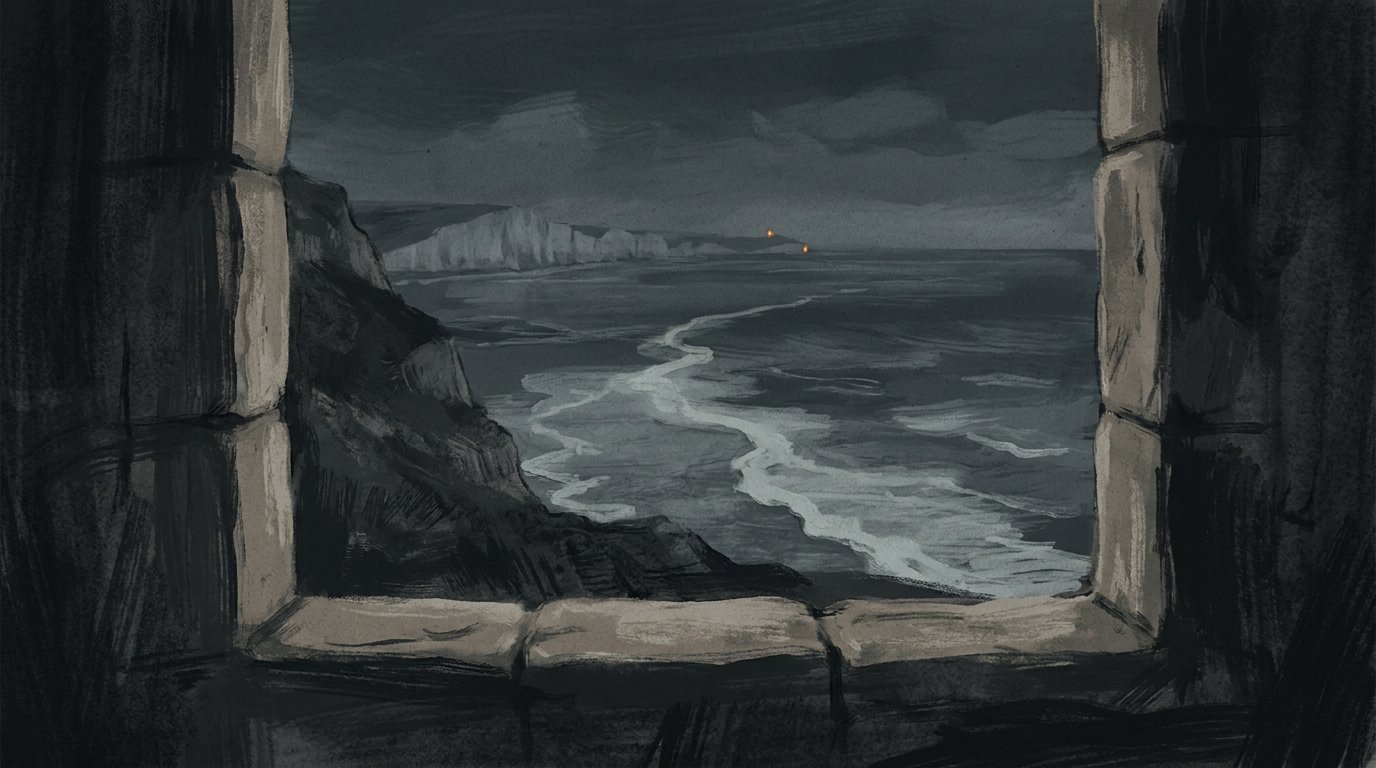
“Dover Beach” — Arnold’s most anthologized poem, built around the speaker standing at a window looking out at the English Channel while the tide retreats.
The central image is the “Sea of Faith,” once at the full, now heard only in its “melancholy, long, withdrawing roar” — a direct statement of Victorian religious doubt in the wake of geology and Darwinian science.
The poem ends asking the beloved to “be true to one another,” since the world offers “neither joy, nor love, nor light, / Nor certitude, nor peace, nor help for pain.” NTA has quoted this closing stanza directly in identification questions more than once.
“The Scholar-Gipsy” (1853) — based on a 17th-century Oxford story (recorded by Joseph Glanvill) of a poor scholar who left the university to join a band of gypsies and learn their secret lore, then wandered the Oxfordshire countryside forever, untouched by time. Arnold uses him as a figure of single-minded purpose set against “this strange disease of modern life,” a phrase that turns up in quote-based MCQs regularly.
“Thyrsis” (1867) — a pastoral elegy for Arthur Hugh Clough, Arnold’s close friend and fellow poet who died in 1861. It’s a deliberate companion piece to “The Scholar-Gipsy,” using the same Oxfordshire landscape and the same elm tree as a symbol of continuity. Questions on Victorian elegy sometimes pair this with Tennyson’s In Memoriam, so know both.

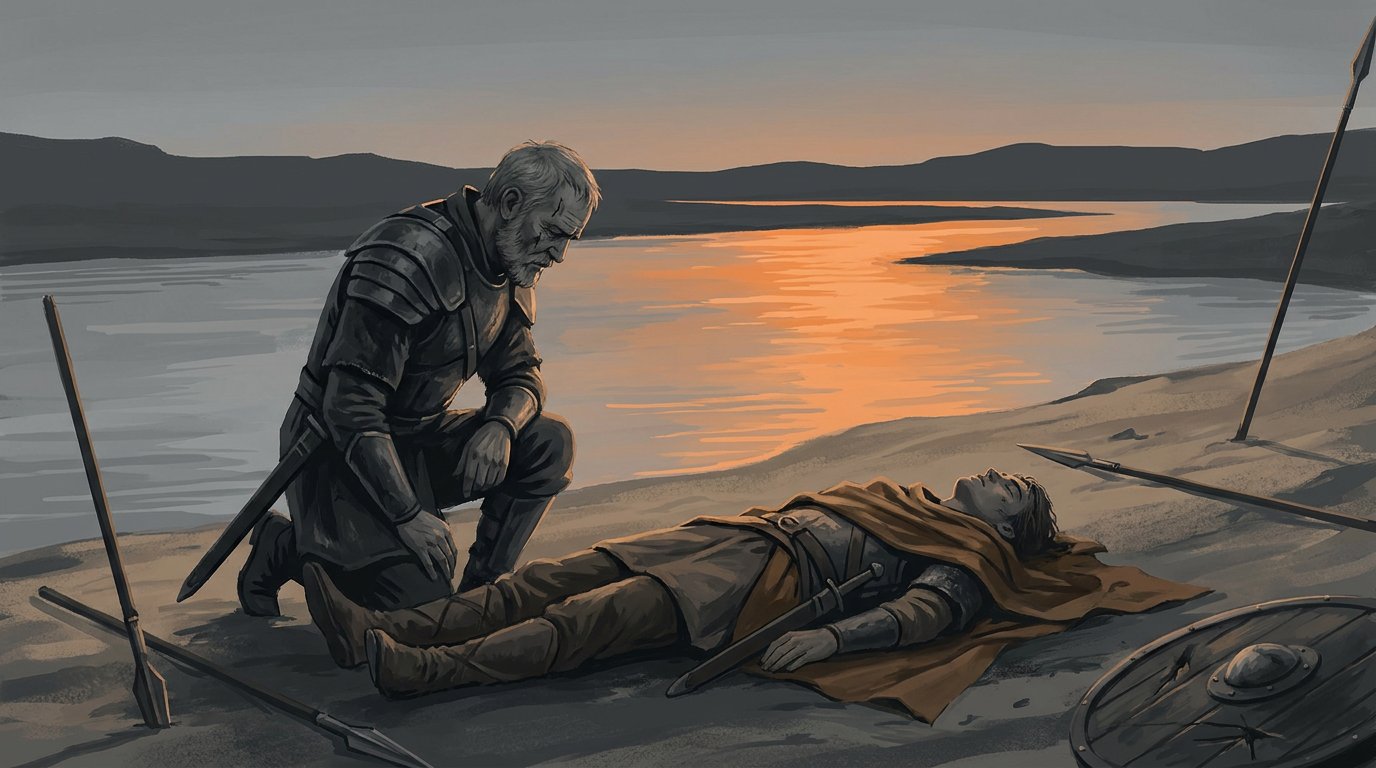
“Sohrab and Rustum” (1853) — a long narrative poem based on an episode from Persian legend (via the Shahnameh), where a father, Rustum, unknowingly kills his own son, Sohrab, in single combat.
Arnold wrote it partly to demonstrate the classical, action-driven epic style he defends in his 1853 Preface, as a contrast to “Empedocles on Etna,” which he’d just withdrawn for lacking action.
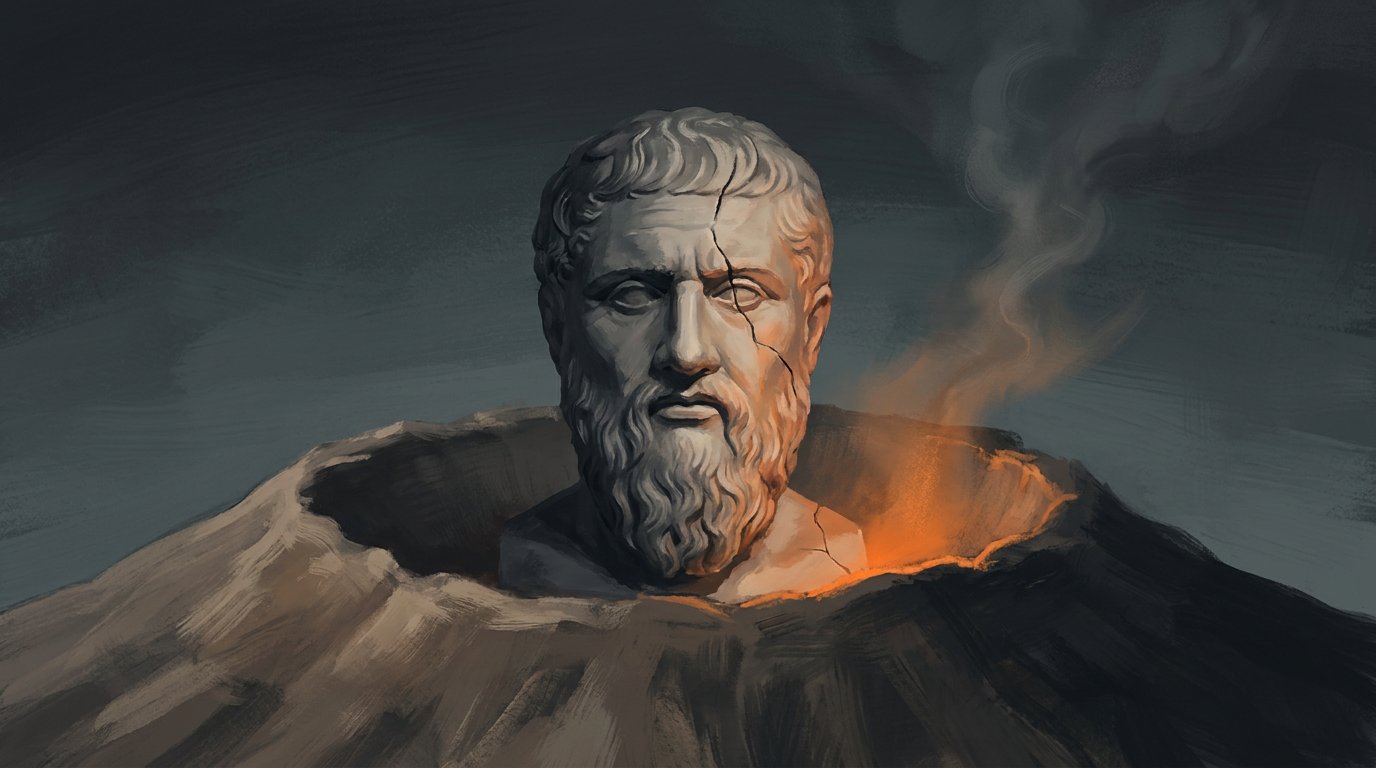
“Empedocles on Etna” (1852, withdrawn 1853) — a philosophical dramatic poem in which the Greek philosopher Empedocles, disillusioned and paralyzed by doubt, throws himself into the volcano. Arnold suppressed it and explained why in the 1853 Preface, making the poem-and-preface pair a single tested unit: know the poem’s plot and the reason he pulled it.
“The Function of Criticism at the Present Time” and “The Study of Poetry” — covered in detail above, these are the two essays NTA returns to most. If you only have time to read two Arnold prose pieces in full before your exam, read these.
Common exam traps and how to avoid them
Students lose marks on Arnold in a handful of predictable ways. First, mixing up which essay contains which concept — touchstones belong to “The Study of Poetry” (1888, second series), disinterestedness belongs to “The Function of Criticism” (1865, first series).
Second, reversing Hebraism and Hellenism, as noted above.
Third, treating Culture and Anarchy as a novel or work of fiction in “which of these is a prose work” questions — it’s social and cultural criticism, not narrative.
Fourth, confusing Arnold’s touchstone method with Eliot’s objective correlative because both involve “testing” a poem against something external; they test different things.
Fifth, getting the Essays in Criticism series backwards — First Series is 1865 and published in his lifetime, Second Series is 1888 and published after his death, which is also why “The Study of Poetry” sometimes gets misdated to an earlier decade than it belongs in.
How to study Matthew Arnold in 5 days (exam strategy)
Day 1: Build the timeline. Birth, death, Rugby, Balliol, 35 years as a schools inspector, Oxford Professor of Poetry (1857–1867), and the full list of works with dates from the section above. Do not skip the biographical dates — NTA has asked direct date questions on Arnold before.
Day 2: Read “Dover Beach” fully and take notes on “The Scholar-Gipsy,” “Thyrsis,” “Sohrab and Rustum,” and “Empedocles on Etna” (plot, why it was withdrawn, and the 1853 Preface argument).
Day 3: Read “The Function of Criticism at the Present Time” and “The Study of Poetry” carefully — disinterestedness, “poetry is a criticism of life,” and the touchstone method. This is where most marks are won or lost.
Day 4: Read Culture and Anarchy — Hebraism vs. Hellenism, sweetness and light, and the Barbarians/Philistines/Populace division. Write the definitions in your own words so they stick under pressure.
Day 5: Drill previous year questions specifically on Arnold. Review the previous year question papers and cross-check your answers against the subject-wise previous year questions collection.
Previous year question patterns
NTA tests Arnold in three recurring formats.
The first is direct quotation identification — being handed a line like “wandering between two worlds” or “the best which has been thought and said” and asked to name the poem or essay.
The second is matching-type questions pairing a concept (touchstone, disinterestedness, sweetness and light) with the correct essay or book title.
The third is chronology, ordering his works or asking which essay collection came before or after his death. The June 2025 question paper is a good recent sample to see how these formats actually appear on the page, and the British Poetry previous year questions and Literary Criticism previous year questions collections let you drill Arnold’s two sides separately before mixing them.
For deeper background on Arnold’s life and the full text of his major essays, the Poetry Foundation’s Matthew Arnold page is a reliable starting point if you want more than exam-focused notes.
Preparing for UGC NET English Literature? Our course covers Matthew Arnold and 50+ other high-weightage authors with video lectures, topic-wise MCQs, and 13 physical booklets delivered to your door. Learn more about the course here.