Here is a fact that trips up more students than it should: William Blake published Songs of Innocence in 1789, a full nine years before the date most UGC NET syllabi use to mark the start of the Romantic period (1798, the year of Lyrical Ballads).
Blake was already deep into his illuminated books, already building his private mythology, while Wordsworth and Coleridge were still working out what Romanticism would even sound like.
NTA classifies him as a Romantic poet anyway, and that timeline gap is exactly the kind of detail examiners like to test.
If you’re preparing for UGC NET English Literature, Blake is one of those writers who looks simple on the surface — short poems, plain vocabulary, nursery-rhyme rhythms — and then quietly punishes anyone who hasn’t actually read past “The Tyger” and “The Lamb.”
Most coaching material treats Blake as a two-poem poet. Set questions in the last few cycles have gone well beyond that: NTA has asked about his prophetic books, his invented mythological figures, his profession as an engraver, and the specific years his major works were etched and printed.
This guide covers the full range, not just the anthology pieces.
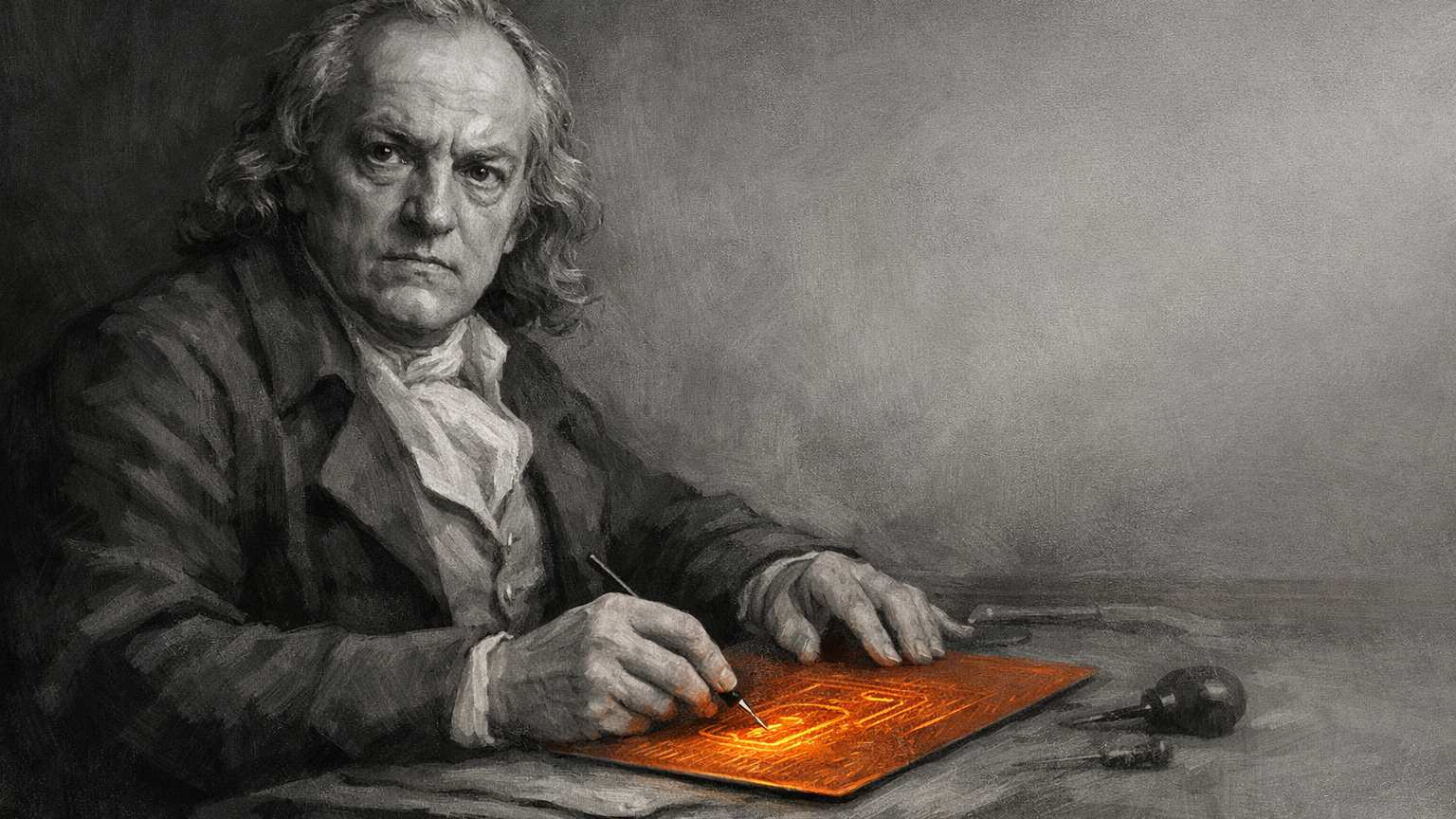
Why William Blake is important for UGC NET
Blake sits in Unit III of the NTA syllabus alongside Wordsworth, Coleridge, Byron, Shelley, and Keats, even though his career actually straddles the late eighteenth century and the early Romantic period.
He typically draws one to two direct questions per cycle, usually from Songs of Innocence and of Experience, plus occasional questions on his prophetic works or his biography (his trade as an engraver, his visionary experiences, his relationship with contemporaries like Henry Fuseli).
If you’ve already worked through William Wordsworth for UGC NET English Literature, you’ll notice Blake gets asked with a different flavor — fewer questions about nature and memory, more about symbolism, contrary states, and invented myth.
He also shows up as a trick option in “which of these poets is NOT associated with X” questions, because his dates and his style don’t match student expectations of a Romantic — a confusion that rarely happens with a poet like John Keats, whose dates sit squarely inside the accepted Romantic window.
Check the 2025 UGC NET English detailed breakdown to see how the Romantic Period unit is typically weighted against the rest of the paper — it’s a small unit with a high hit rate if you know the poets cold, and Blake is consistently one of the four or five names that must be prepared, not skimmed.
Major works you must know (with dates)
Blake worked as a printmaker and engraver by trade, and he designed, etched, printed, and hand-colored most of his own books using a process he called illuminated printing. NTA occasionally tests this production method directly, so know it alongside the titles.
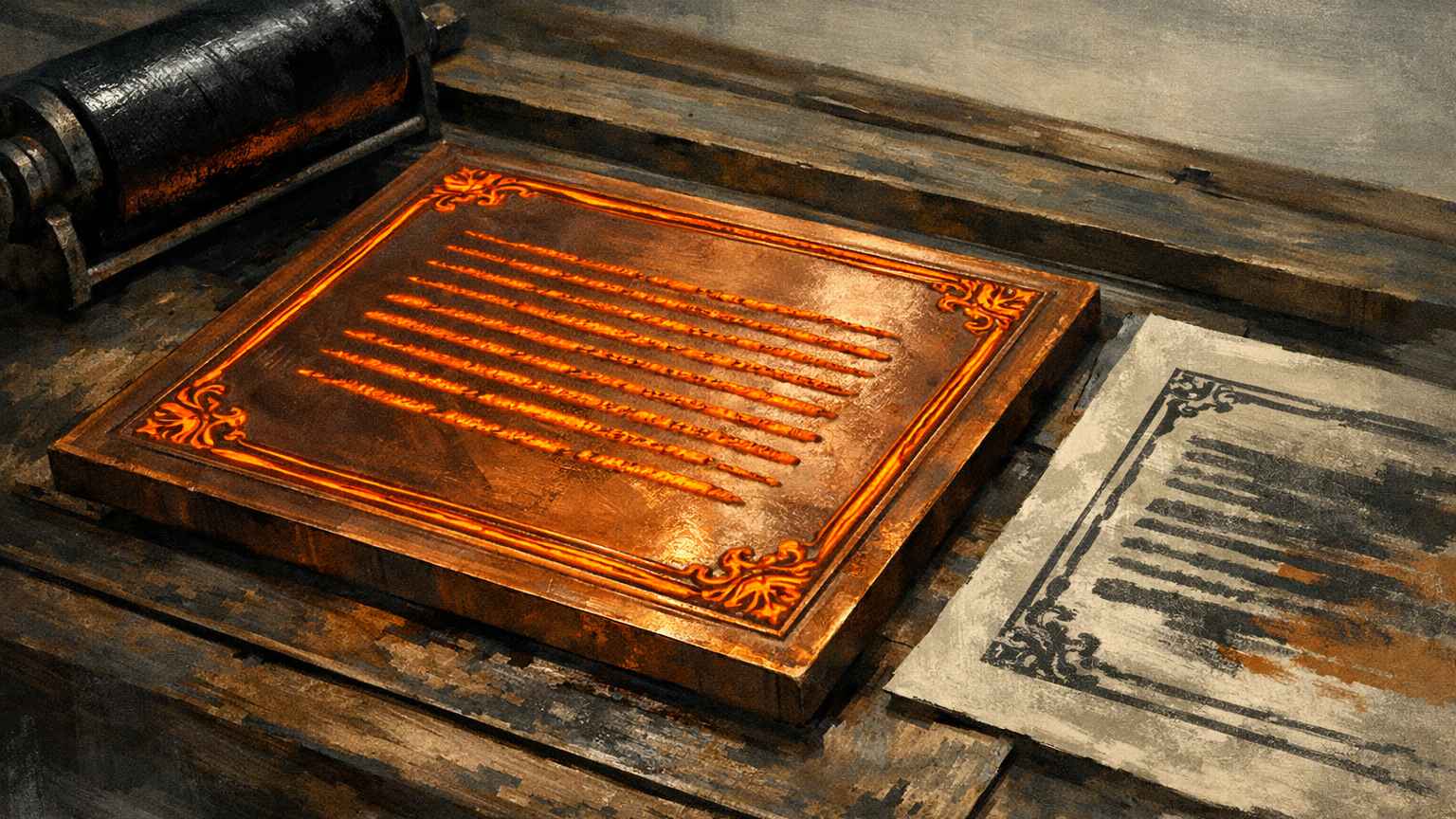
- Poetical Sketches (1783) — his first printed collection, conventional in style, largely ignored in his lifetime
- Songs of Innocence (1789) — 19 poems including “The Lamb,” “The Chimney Sweeper,” “Infant Joy,” and “The Little Black Boy,” etched and hand-colored by Blake himself
- The Marriage of Heaven and Hell (1790) — prose and verse combined; contains “Without Contraries is no progression” and the “Proverbs of Hell”
- The French Revolution (1791) — an unfinished narrative poem responding to events in France; only Book I survives in print
- America a Prophecy (1793) — first of the “Continental Prophecies,” featuring Orc as a symbol of revolutionary energy
- Visions of the Daughters of Albion (1793) — a critique of sexual and social oppression through the figure of Oothoon
- Europe a Prophecy (1794) — continues the mythology introduced in America, with Enitharmon and Los as central figures
- The Book of Urizen (1794) — Blake’s parody of Genesis, introducing Urizen as a figure of repressive reason and law
- Songs of Experience (1794) — 26 poems including “The Tyger,” “London,” “The Sick Rose,” and “The Human Abstract,” first published bound together with Songs of Innocence as Songs of Innocence and of Experience: Shewing the Two Contrary States of the Human Soul
- Milton a Poem (composed roughly 1804–1810) — includes the preface poem “And did those feet in ancient time,” later set to music and known as the hymn “Jerusalem”
- Jerusalem: The Emanation of the Giant Albion (composed roughly 1804–1820) — Blake’s longest and most complex prophetic book, his final major illuminated work
Get the 1789/1794 split right. Students regularly write that Songs of Innocence and of Experience was published as a single unified work in 1789 — it wasn’t. Innocence came first, alone, five years earlier.
Key themes and concepts tested in UGC NET
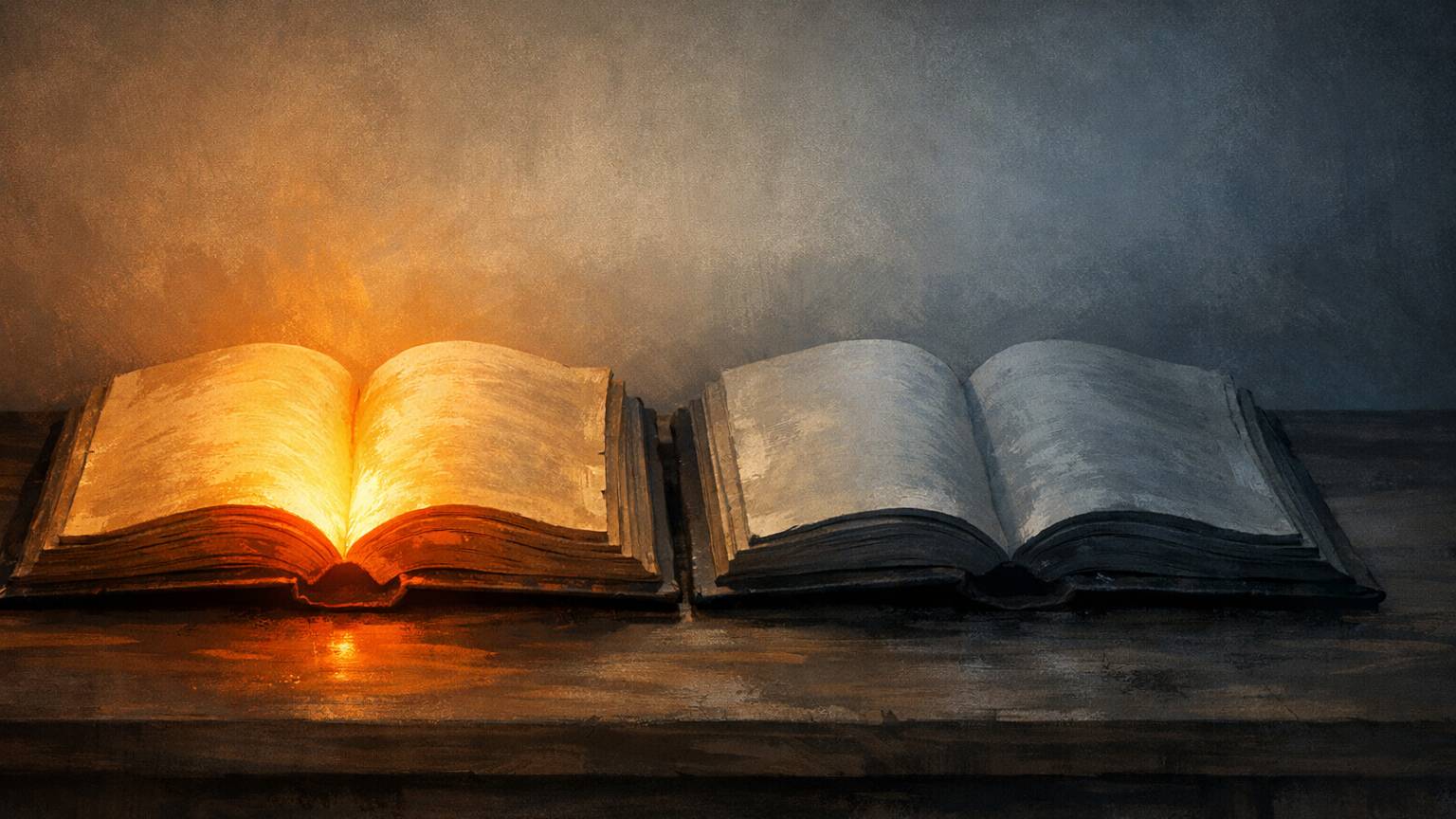
Contrary states of the soul. Blake’s own subtitle for the combined Songs tells you exactly how to read them: innocence and experience are not a simple story of moving from good to bad.
They are two ways of seeing the same world, and Blake pairs poems across the two sequences deliberately — “The Lamb” against “The Tyger,” the two versions of “The Chimney Sweeper,” the two versions of “Holy Thursday,” the two versions of “Nurse’s Song.” NTA loves matching questions built around these pairs.
Symbolism over allegory. Blake’s images — the lamb, the tiger, the rose, the worm, the chimney sweeper — carry meaning that shifts with context rather than standing for one fixed idea.
The tiger is not simply “evil” any more than the lamb is simply “good.” Both poems ask the same underlying question (who made this creature?) and refuse to fully answer it. Examiners test whether students understand this ambiguity or fall back on flat, one-line readings.
Critique of institutionalized religion and reason. Urizen, the figure Blake introduces across the prophetic books, represents law, convention, and rationalism used as tools of oppression — not reason itself, but reason weaponized against imagination and desire.
This concept connects directly to Blake’s line “mind-forged manacles” from “London,” describing constraints people impose on themselves through internalized authority.
Social criticism. “The Chimney Sweeper” (both versions), “London,” and “Holy Thursday” (both versions) attack child labor, institutional charity that humiliates the poor, and the material conditions of late-eighteenth-century London.
These poems are frequently tested for their specific images: the “black’ning Church,” the “hapless Soldier’s sigh,” the “youthful Harlot’s curse.”
The prophetic mythology. Blake built a private cosmology across his later books — Urizen (reason/law), Los (imagination/time), Orc (revolutionary energy, often linked to the French Revolution), Enitharmon (space/spiritual beauty), and Albion (a symbol for both a mythic giant and England itself).
You don’t need to master the full system, but you should be able to match each name to its rough meaning.
Poem-by-poem breakdown
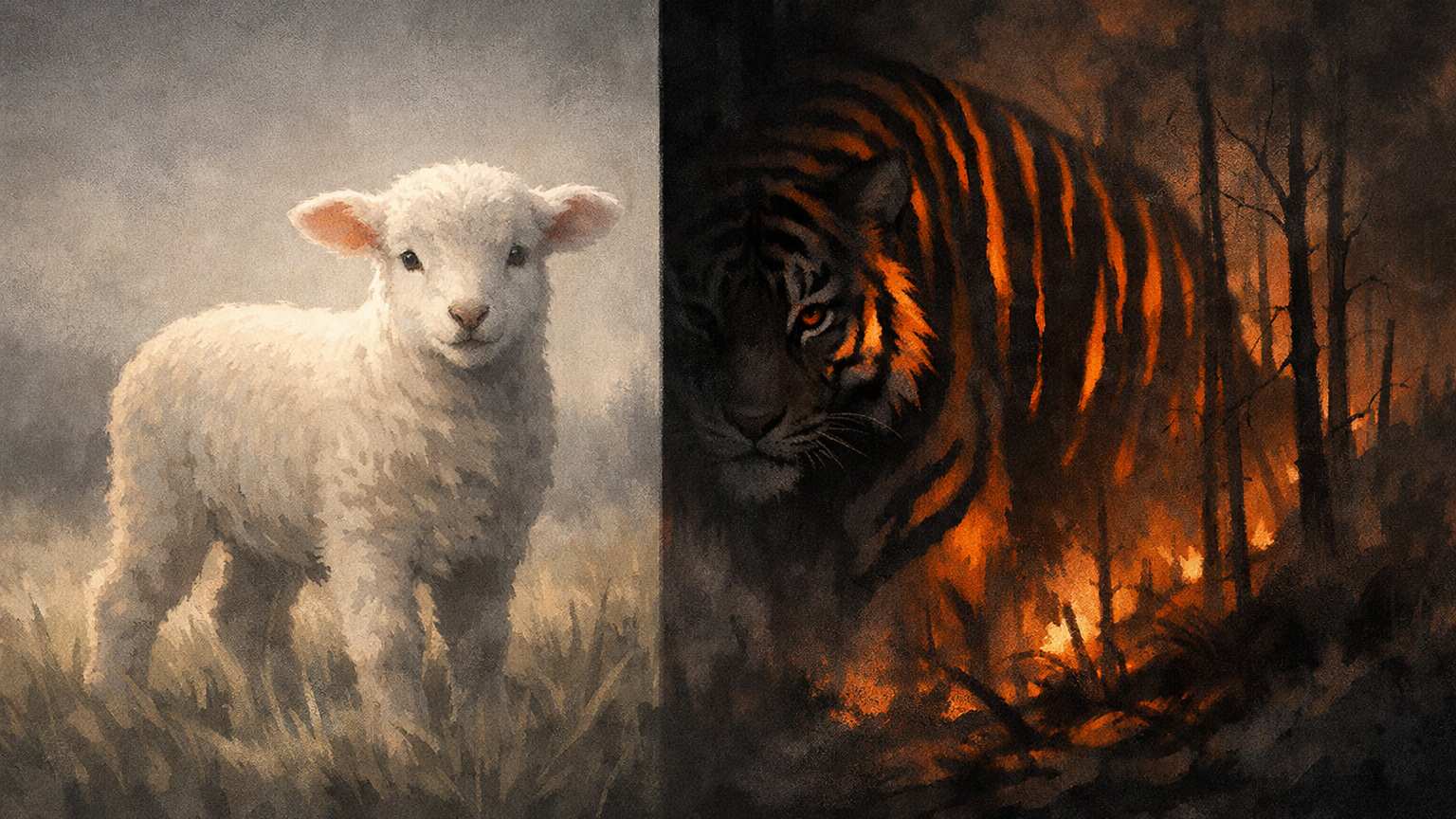
“The Lamb” (Innocence) — a child’s question-and-answer poem addressed to a lamb, ending with an identification of the lamb with Christ. Simple diction, simple rhyme, deliberately childlike voice.
“The Tyger” (Experience) — the companion piece, asking “What immortal hand or eye / Could frame thy fearful symmetry?” NTA has quoted this line directly in fill-in-the-blank and identify-the-poem questions across multiple cycles. Know that the poem never answers its own central question.
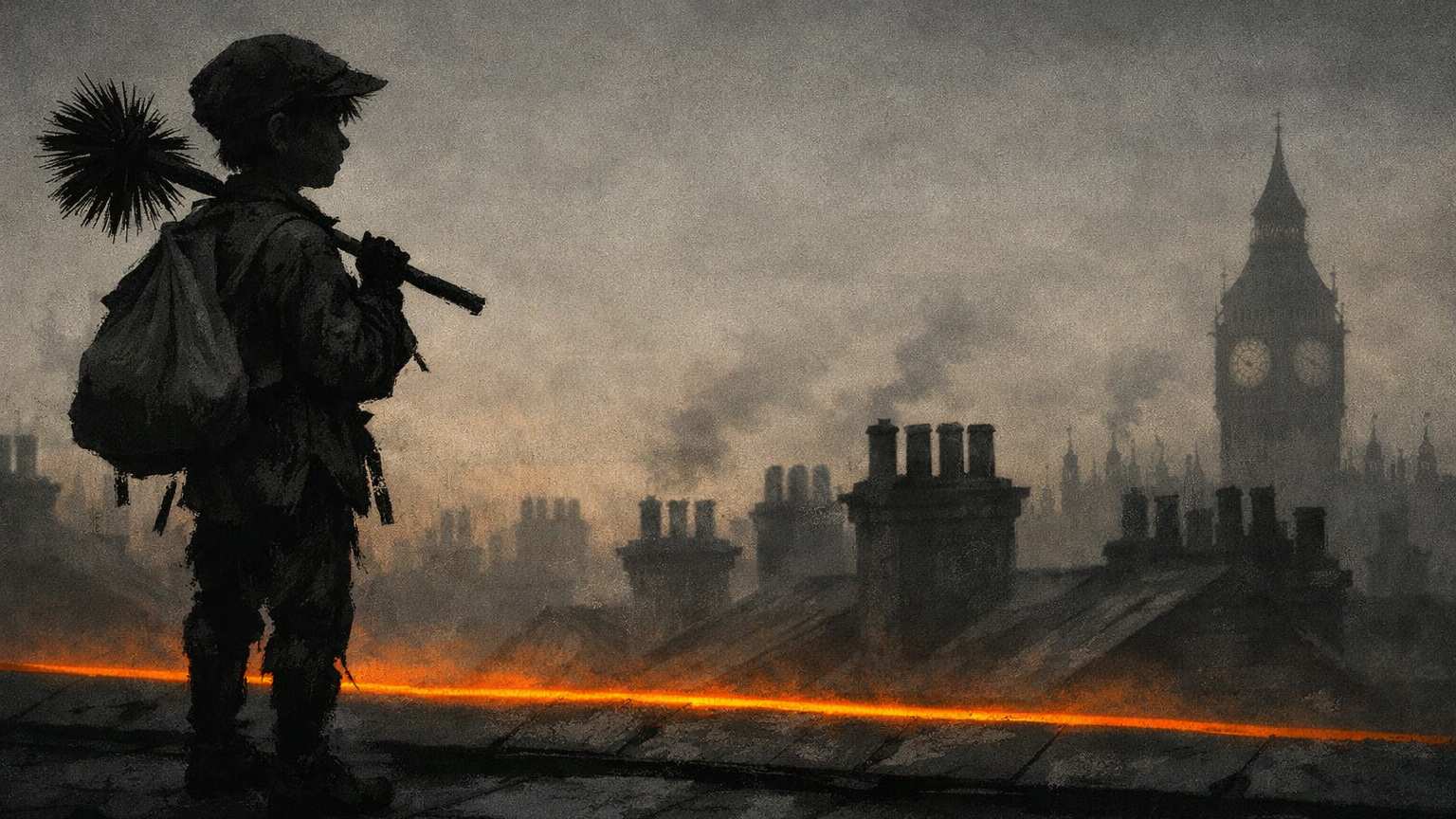
“The Chimney Sweeper” (Innocence version) — a young sweep dreams of an angel freeing all the sweeps from their “coffins of black,” told to be content since “if all do their duty, they need not fear harm.” The irony is aimed at the religious consolation offered to exploited children.
“The Chimney Sweeper” (Experience version) — shorter, angrier, and direct: “They clothed me in the clothes of death… And are gone to praise God and his Priest and King, / Who make up a heaven of our misery.” Compare the tone shift with the Innocence version; this contrast is a favorite exam pairing.
“London” — a walk through the city cataloguing suffering: the “mind-forg’d manacles,” the chimney-sweeper’s cry that “appalls” the church, the soldier’s sigh that runs in blood down palace walls, the “youthful Harlot’s curse” that blights the marriage hearse. Every image in this poem has appeared in some form in past papers.
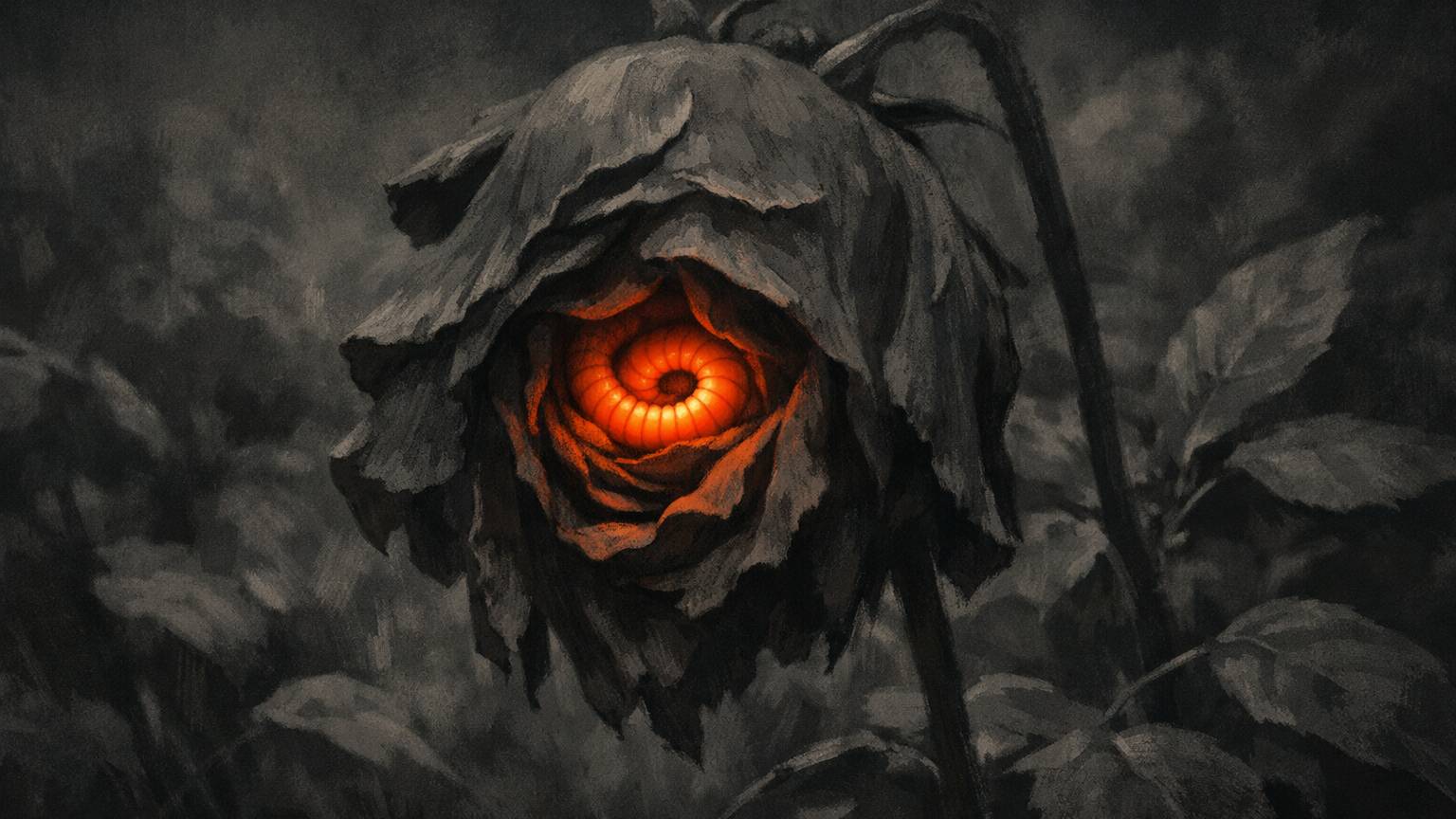
“The Sick Rose” — a short, riddling poem about an “invisible worm” that destroys a rose’s life “in the howling storm,” widely read as a comment on corrupted love or hidden destruction.
“A Poison Tree” — from Experience, about suppressed anger (“I was angry with my foe: / I told it not, my wrath did grow”) that grows into a fatal apple, ending with the enemy’s death. Tests understanding of repression as Blake’s central psychological concern.
“Holy Thursday” (both versions) — the Innocence version describes charity children marching into St. Paul’s in apparent order and beauty; the Experience version asks whether a rich country should reduce its children to poverty, calling England’s fields “bleak & bare” and its ways “eternal winter.”
If you’re solving past papers on this topic, the subject-wise previous year questions collection groups Blake’s questions together so you can see the pattern across years instead of hunting through scattered papers.
Common exam traps and how to avoid them
- Mixing up the publication dates of the two Songs sequences. Songs of Innocence is 1789. Songs of Experience is 1794. The combined title with the “Two Contrary States” subtitle also dates to 1794. Do not write 1789 for the combined edition.
- Confusing Urizen with Los. Urizen represents reason, law, and restrictive order. Los represents imagination, time, and the poetic/creative faculty that opposes Urizen’s control. Students regularly swap these two in MCQs.
- Assuming Blake belongs cleanly to the “second generation” or “first generation” Romantics. He fits neither label well. His major early work predates 1798, and he had little direct contact with Wordsworth, Coleridge, Byron, Shelley, or Keats. Treat him as chronologically prior to the main Romantic movement but grouped with it by convention.
- Reading “The Tyger” as a poem that answers its own question. It doesn’t. The poem is a string of unanswered questions about who or what could create such a violent, beautiful creature. Any option claiming the poem “concludes” that God made the tiger is a wrong answer.
- Forgetting that Blake illustrated and hand-printed his own books. Questions about his profession (engraver) or his method (illuminated printing, relief etching) come up separately from questions about poem content. Don’t only prepare the poems — prepare the biography too.
How to study William Blake in 5 days (exam strategy)
Day 1: Read all of Songs of Innocence and of Experience in the paired order Blake intended — innocence poem, then its experience counterpart. Note the tonal shift in each pair.
Day 2: Memorize exact dates for the ten works listed above. Make a simple timeline: 1783, 1789, 1790, 1791, 1793 (two works), 1794 (three works), 1804–1810, 1804–1820.
Day 3: Learn the five mythological names (Urizen, Los, Orc, Enitharmon, Albion) and one line each about what they represent. Don’t go deeper into the full prophetic narrative unless you have time to spare.
Day 4: Drill previous year questions specifically on Blake. Use the British Poetry previous year questions archive and isolate every Blake question you can find, then re-solve them without looking at the answer key first.
Day 5: Review the exam traps above one more time, then read the 5 things to do 40 days before the UGC NET English Literature exam guide for general last-mile strategy that applies across all authors, not just Blake.
Previous year question patterns
NTA tends to test Blake in three recurring formats: line identification (given a famous line, name the poem), pairing questions (match an Innocence poem to its Experience counterpart), and date/sequence questions (arrange his works chronologically or identify which work came first).
The December 2024 paper included a question on Blake that followed this same identification pattern — you can review it directly in the December 2024 UGC NET English Literature question paper.
For a dedicated set of Blake-only previous year questions, the William Blake previous year questions page on our site pulls together questions across multiple exam cycles so you can practice the exact format NTA uses.
Preparing for UGC NET English Literature? Our course covers William Blake and 100+ other high-weightage authors with video lectures, topic-wise MCQs, and 13 physical booklets delivered to your door. Learn more about the course here.