In 1946, the American critics W.K. Wimsatt and Monroe Beardsley published “The Intentional Fallacy,” arguing that a poet’s stated purpose has no bearing on what a poem means.
Twenty-one years later, Roland Barthes published “The Death of the Author” and made what sounds like the same argument for entirely different reasons.
One comes from New Criticism’s insistence on the text as a self-containe object, the other from a poststructuralist attack on the very idea of fixed meaning.
UGC NET English Literature candidates conflate the two constantly, and NTA has built questions around exactly that overlap.
Getting Barthes right means knowing not just what he said, but why his version of “the author doesn’t matter” is a different claim from the New Critics’ version.
Barthes sits in the Literary Criticism and Theory unit, usually grouped under Structuralism and Post-Structuralism alongside Ferdinand de Saussure, Jacques Derrida, and Michel Foucault.
He is one of the most reliably tested theorists in the UGC NET English syllabus — rarely absent, often appearing twice in the same paper once you count both a direct question and a comparison question that uses him as a foil for someone else.
This guide covers his major essays with dates, the concepts NTA actually tests, the traps that cost marks, and a five-day plan if your exam is close.
Why Roland Barthes is important for UGC NET
Barthes appears almost every cycle in the Literary Theory and Criticism section, and unlike some theorists who show up once and disappear, he tends to recur across multiple question types in the same paper.
One MCQ on “The Death of the Author,” another testing Mythologies, sometimes a third on semiology or S/Z. Check the 2025 UGC NET English detailed breakdown and you’ll see Literary Theory consistently pulls a heavier share of marks than most students expect going in, which makes a theorist as prolific as Barthes worth real preparation time rather than a last-night skim.
He also functions as connective tissue between other high-yield names. Saussure’s structural linguistics feeds his semiology.
His concept of the “readerly” and “writerly” text anticipates Derrida’s attack on fixed meaning. Foucault’s “What Is an Author?” (1969) responds directly to Barthes’ essay published two years earlier, and questions comparing the two are common enough that if you’ve already worked through Michel Foucault for UGC NET English Literature, you should read this guide alongside it rather than separately.
The same goes for Jacques Derrida for UGC NET English Literature — Barthes, Derrida, and Foucault form a cluster NTA likes to test together, and knowing where one theorist’s idea ends and another’s begins is worth more marks than knowing any single essay in isolation.
Barthes’ semiology also underlies later postcolonial method — if you’ve studied Edward Said for UGC NET English Literature, you’ll recognize the same instinct to read culture as a system of signs rather than a neutral background.
Major works you must know (with dates)
NTA asks direct chronology questions on Barthes more than on most theorists, partly because his career moves cleanly from structuralism into poststructuralism and the dates mark that shift. Learn this sequence, not just the titles.
Writing Degree Zero (1953) — Barthes’ first book, written while he was in his late thirties recovering from tuberculosis. It argues that a writer’s choice of style is itself a political and historical act, not a neutral vehicle for content.
This is early Barthes, closer to Sartre’s engaged literature than to the structuralist he would soon become.
Mythologies (1957) — A collection of short essays, originally written for the magazine Les Lettres nouvelles, examining how everyday objects and media — wrestling matches, soap powder advertisements, steak and chips, the face of Greta Garbo — function as “myths” that naturalize bourgeois ideology.
The long theoretical essay appended to the collection, “Myth Today,” is the part NTA quotes most often.

Elements of Semiology (1964) — Barthes’ attempt to extend Saussure’s linguistic model of signifier and signified into a general science of signs covering fashion, food, and other cultural systems. This is the book that earns him the label “semiologist” alongside “critic.”
“The Death of the Author” (1967, English; 1968, French) — His single most-tested essay. Published first in English translation in the American magazine Aspen, then in French the following year. Barthes argues that a text is “a tissue of quotations drawn from the innumerable centres of culture,” and that reading for the author’s intended meaning shuts down the far richer plurality of meanings a text can generate.
“The birth of the reader must be at the cost of the death of the Author,” he writes — a line NTA has quoted directly in more than one paper.

S/Z (1970, French; 1974, English translation) — A book-length structural analysis of Balzac’s 1830 novella Sarrasine, in which Barthes breaks the text into 561 numbered fragments (“lexias”) and reads each one through five codes.
This is Barthes at his most technical, and the five codes are a favorite matching-question source.
The Pleasure of the Text (1973) — Introduces the distinction between plaisir (pleasure, the comfortable satisfaction of a readable text) and jouissance (bliss or ecstasy, the disruptive, almost erotic charge of a text that unsettles the reader’s sense of self).
Image, Music, Text (1977) — An English-language essay collection assembled and translated by Stephen Heath, gathering “The Death of the Author,” “From Work to Text,” and other pieces not originally published together in French.
Students often assume this is a single French original; it is a translator’s compilation, and NTA has tested that fact.
Camera Lucida (1980, French; 1981, English translation) — Barthes’ last book, written after his mother’s death and published shortly before his own. It introduces studium (the general cultural interest a photograph holds) and punctum (the small, personal, wounding detail that pierces the viewer).
Barthes died in a road accident in Paris on 26 March 1980, weeks after being struck by a laundry van, at age 64.
Key themes and concepts tested in UGC NET
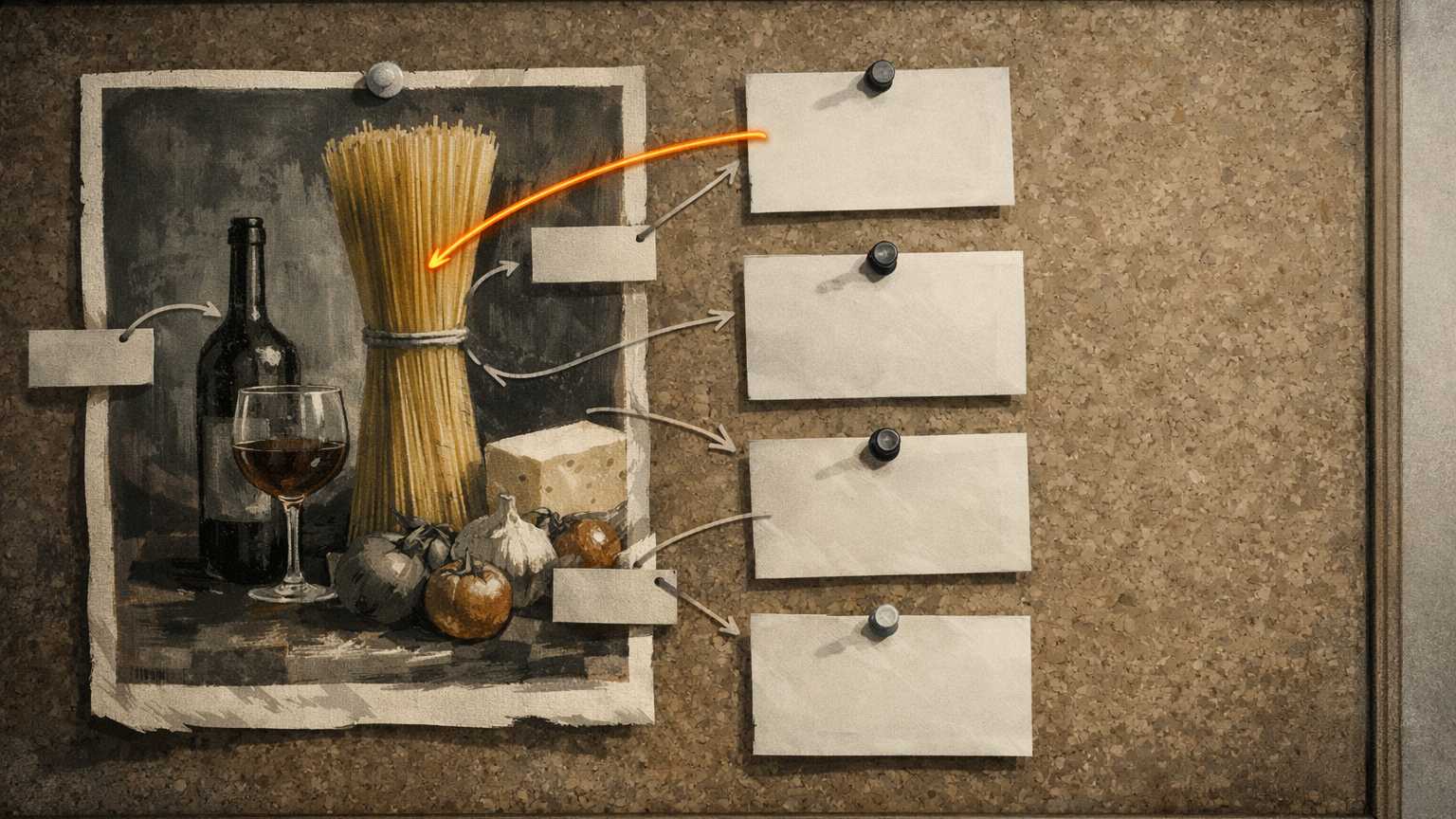
Semiology and the sign. Barthes takes Saussure’s signifier/signified pair and applies it beyond language to clothing, food, and advertising. In “Rhetoric of the Image” (1964), his analysis of a Panzani pasta advertisement remains one of the most cited close readings in semiotics — know that this essay exists and what it does, because NTA has referenced it directly.
Myth as depoliticized speech. In Mythologies, Barthes defines myth not as an ancient story but as a “second-order semiological system” — a way of taking something historical and cultural and making it look natural, eternal, and beyond question.
A wine advertisement that makes wine seem like an innate part of French national character is myth at work, in Barthes’ sense.
The Death of the Author and the birth of the reader. The core claim: a text’s meaning is not fixed by what the author intended but is produced anew by every reader.
This is not the same as saying “any interpretation is valid” — Barthes is attacking the authority of the author as the final judge of meaning, not proposing total interpretive chaos.
Students who reduce this to “the author’s opinion doesn’t matter” tend to pick wrong answers on nuanced questions.
Readerly (lisible) and writerly (scriptible) texts. Introduced in S/Z, a readerly text is conventional, realist, and consumed passively — the reader receives a fixed meaning.
A writerly text resists easy consumption and forces the reader to actively produce meaning alongside it. Balzac’s Sarrasine is, in Barthes’ analysis, mostly readerly, which is part of why he chose it — to demonstrate how even a “classic realist” text can be pulled apart into plural, unstable codes.

The five codes of S/Z. Barthes identifies five codes operating in any narrative: the hermeneutic code (questions and enigmas that create suspense), the proairetic or action code (sequences of actions and their logic), the semic code (connotations that build character or atmosphere), the symbolic code (broader thematic oppositions like life/death or male/female), and the cultural or referential code (general knowledge and shared cultural assumptions the text draws on).
This list is a recurring matching-question source in UGC NET papers.

Studium and punctum. From Camera Lucida: studium is the polite, general interest a photograph invites — its historical or cultural context.
Punctum is the accidental detail that “pricks” or wounds a particular viewer, personal and unpredictable, resistant to analysis. NTA sometimes tests this pair alongside questions on visual culture and photography theory.

Barthes concept by concept: what to actually read
You don’t need to read Mythologies cover to cover or all 561 lexias of S/Z. For UGC NET purposes, prioritize like this:
“Myth Today” (the theoretical essay in Mythologies). Read a detailed summary of the signifier/signified/sign model as Barthes extends it into signifier/signified/myth. Know at least two of his named examples — the Paris-Match cover of the saluting Black soldier, and the wrestling match essay (“The World of Wrestling”) — because NTA has quoted both.
“The Death of the Author.” Read the full essay once; it’s short, around six pages in most editions. Memorize two direct quotes: “the birth of the reader must be at the cost of the death of the Author,” and the description of the text as “a tissue of quotations drawn from the innumerable centres of culture.” NTA quotes this essay more than any other Barthes text.
S/Z, introduction and the five codes. You don’t need the full Balzac analysis. Read a summary of the five codes with one example of each, and know that Barthes applies them to Sarrasine, a story about a sculptor who falls in love with a singer who turns out to be a castrato.

Camera Lucida, studium and punctum. A short summary is enough. Know the book followed his mother’s death and that Barthes searches through photographs of her looking for the one that captures her essence — the Winter Garden photograph, which he describes but never reproduces in the book.
Common exam traps and how to avoid them
Trap 1: Confusing Death of the Author with the intentional fallacy. Wimsatt and Beardsley’s 1946 essay argues authorial intention is irrelevant to textual meaning from a New Critical, formalist standpoint — the poem is a self-sufficient verbal object.
Barthes’ 1967 essay makes a related but different claim from a poststructuralist standpoint: meaning is produced by language and readers, and the “Author-God” is an ideological construct that limits interpretive freedom.
If a question asks which theorist coined “the intentional fallacy,” the answer is Wimsatt and Beardsley, not Barthes.

Trap 2: Mixing up Barthes and Foucault on authorship. Both wrote influential pieces on the author, but they ask different questions. Barthes declares the author dead and shifts authority to the reader.
Foucault’s “What Is an Author?” (1969) asks instead how the “author function” operates within discourse to classify and limit texts — he’s less interested in celebrating the reader and more interested in how the author-concept regulates meaning within institutions.
If a question uses the phrase “author function,” the answer is Foucault, not Barthes.
Trap 3: Getting the S/Z timeline wrong. S/Z was published in French in 1970 and translated into English by Richard Miller in 1974. Questions sometimes list 1970 as an option and 1974 as another; know which year applies to which language edition, since NTA occasionally specifies “in its original French publication” or “in English translation” to test exactly this.
Trap 4: Assuming Image, Music, Text is a French original. It is an English-language anthology, assembled and translated by Stephen Heath in 1977, gathering essays originally published separately in French across the 1960s and 70s.
Students who assume it’s a single unified French book written in 1977 lose marks on questions testing this detail specifically.
Trap 5: Confusing plaisir and jouissance. Plaisir (pleasure) describes the comfortable, culturally reinforcing satisfaction of conventional, readerly texts. Jouissance (bliss) describes the more radical, unsettling, almost bodily rupture produced by texts that break with convention.
Getting the direction backwards — treating jouissance as the “comfortable” pleasure — is a common wrong answer NTA plants as a distractor.
You’ll find more PYQ-based traps like these in the Roland Barthes previous year UGC NET English collection and the broader literary criticism previous year questions page — working through actual papers is a faster way to internalize these distinctions than re-reading the essays a third time.
How to study Roland Barthes in 5 days (exam strategy)
Day 1 — Timeline and major works. Lock in the sequence: Writing Degree Zero (1953), Mythologies (1957), Elements of Semiology (1964), “The Death of the Author” (1967/1968), S/Z (1970/1974), The Pleasure of the Text (1973), Image, Music, Text (1977), Camera Lucida (1980/1981). Write this out from memory until you can do it without checking.
Day 2 — Death of the Author, deeply. Read the full essay once. Extract the two key quotes given above. Write a two-line note distinguishing it from Wimsatt and Beardsley’s intentional fallacy and from Foucault’s “author function.”
This single day covers the highest-yield single essay in the whole syllabus for this writer.
Day 3 — Mythologies and semiology. Read a summary of “Myth Today” and two named examples (the wrestling essay, the Paris-Match soldier).
Understand the signifier/signified/myth structure well enough to apply it to a new example if a question describes one you haven’t seen before — NTA sometimes tests the concept with an unfamiliar illustration rather than a memorized one.
Day 4 — S/Z and later works. Learn the five codes (hermeneutic, proairetic, semic, symbolic, cultural) with one example each. Read a short summary of Camera Lucida‘s studium/punctum distinction and The Pleasure of the Text‘s plaisir/jouissance pair.
Day 5 — MCQ practice and cross-theorist comparison. Do 30-40 MCQs specifically on Barthes and the surrounding cluster of Saussure, Derrida, and Foucault. Check the December 2025 UGC NET English topic-wise breakdown to see exactly how recent papers distributed marks across Literary Theory. For general last-mile advice, the 5 things to do 40 days before UGC NET English Literature exam guide is worth a read before your final revision sprint.
Previous year question patterns
NTA tests Barthes in a handful of recurring formats:
- Essay-to-concept matching: Given an essay title, identify its core concept — “The Death of the Author” pairs with the reader’s authority over meaning; S/Z pairs with the five codes; Mythologies pairs with myth as depoliticized speech.
- Quote attribution: Given a line like “the birth of the reader must be at the cost of the death of the Author,” identify the author and the essay.
- Chronology: Order Barthes’ major works by publication date, or identify which came before or after a specific year.
- Cross-theorist distinction: Which of the following ideas belongs to Barthes and which to Foucault or Derrida — this format has appeared repeatedly and rewards knowing the boundaries between the three, not just each one individually.
- True/false statement sets: Multiple statements about Barthes’ contributions to literary theory (structural analysis, semiology, questioning of the author) where you must identify which are accurate — a format that has appeared in past NTA papers.
To see these patterns in real papers, work through the subject-wise English Literature previous year questions collection or download full UGC NET English previous year question papers and search for Barthes across multiple cycles. For a concise overview of his contribution to structuralism, the Britannica entry on Roland Barthes is a reliable outside reference if you want a quick authoritative summary alongside your exam notes.
Preparing for UGC NET English Literature? Our course covers Roland Barthes for UGC NET English Literature and 50+ other high-weightage theorists and authors — with video lectures, topic-wise MCQs, and 13 physical booklets delivered to your door. Explore the study material for UGC NET English Literature here.