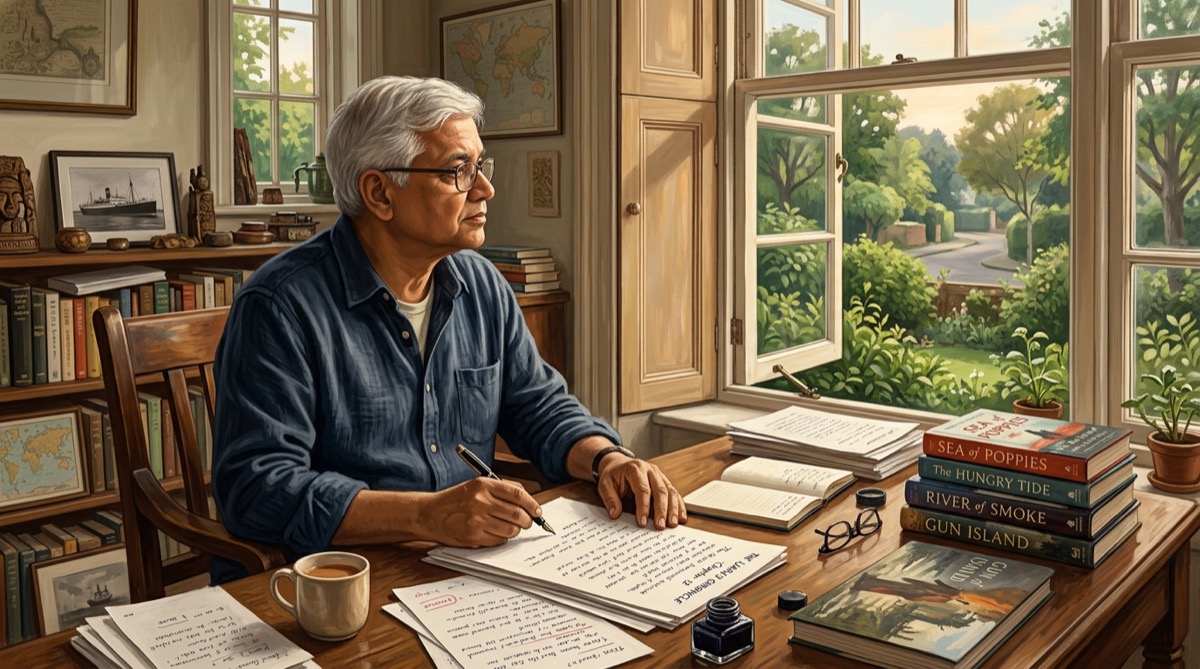
If you are preparing for UGC NET English Literature and haven’t taken Amitav Ghosh seriously yet, you are leaving marks on the table.
NTA asks at least one or two questions on him in most exam cycles, and the questions are almost always about specific facts — which novel belongs to which trilogy, what award a book won, which work deals with what subject.
These are not interpretation questions. They are memory questions, and that makes them among the easiest marks to secure in the Indian Literature unit.
Ghosh is the most internationally recognized Indian English novelist after Salman Rushdie.
If you want to see exactly how NTA frames Indian Literature questions, check the Indian Literature previous year questions compiled by Limitless Literature — Ghosh appears across multiple exam cycles there.
Why Amitav Ghosh matters for UGC NET
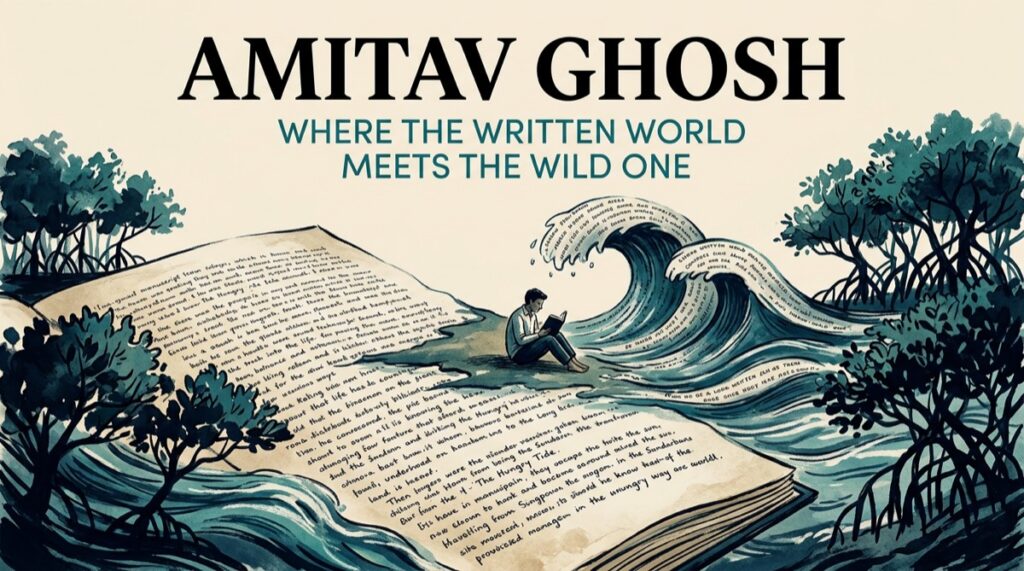
Ghosh bridges several things NTA examiners love to test: postcolonial history, the mixing of genres (fiction with anthropology, science fiction with historiography), and the Ibis Trilogy, which has become a standalone topic in the exam in recent years.
Born on July 11, 1956 in Calcutta, Ghosh studied at Delhi University and then went to Oxford for a D.Phil. in Social Anthropology.
That academic background is not trivia — it shows up directly in his fiction. His novels blend fieldwork, archival research, and storytelling in ways that don’t fit neatly into any single genre category.
NTA has tested this combination explicitly with questions like: “Who among the following combines anthropology, history, and fiction?”
His work spans historical fiction, speculative fiction, eco-criticism, and straight literary non-fiction. Knowing the categories matters because the exam loves to ask you to place works correctly.
Major works you must know (with dates)
Memorize these. NTA tests chronology and correct attribution heavily.
Fiction:
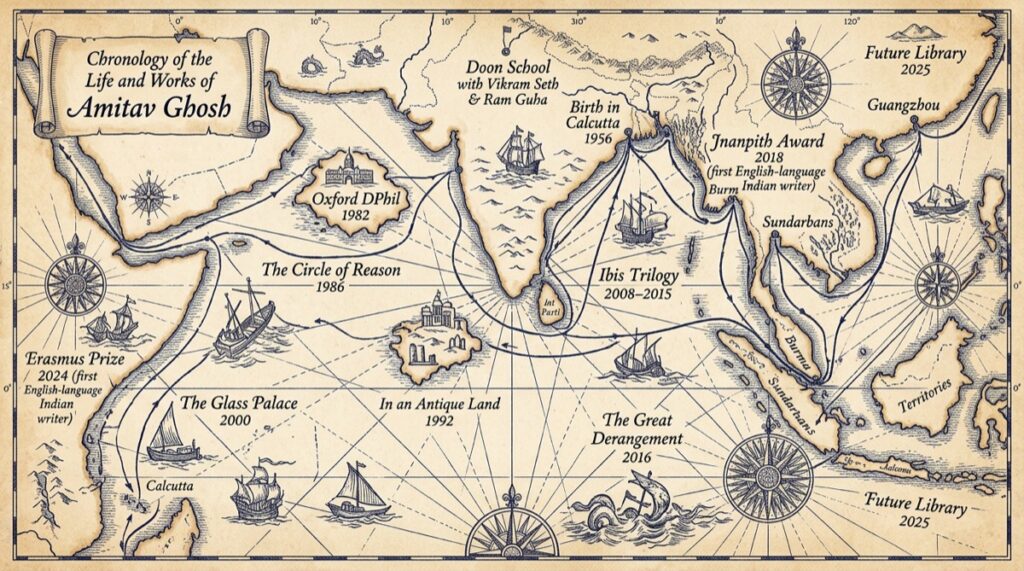
- The Circle of Reason (1986) — debut novel; protagonist Alu, a weaver; influenced by rationalist thought
- The Shadow Lines (1988) — his breakthrough; Sahitya Akademi Award (1990); themes of borders, memory, partition
- The Calcutta Chromosome (1996) — speculative fiction; Arthur C. Clarke Award (1997); reimagines Ronald Ross’s malaria discovery
- The Glass Palace (2000) — historical epic; spans Burma, India, Malaya; covers colonial period through WWII
- The Hungry Tide (2004) — set in the Sundarbans; deals with ecology, refugees, conflict
- Sea of Poppies (2008) — Ibis Trilogy Part 1; Booker Prize shortlist; opium trade, colonial Bengal
- River of Smoke (2011) — Ibis Trilogy Part 2; Canton opium trade
- Flood of Fire (2015) — Ibis Trilogy Part 3; First Opium War
- Gun Island (2019) — migration, climate crisis, Bon Bibi legend
Non-fiction:
- In an Antique Land (1992) — part memoir, part historical reconstruction; medieval India-Egypt connections
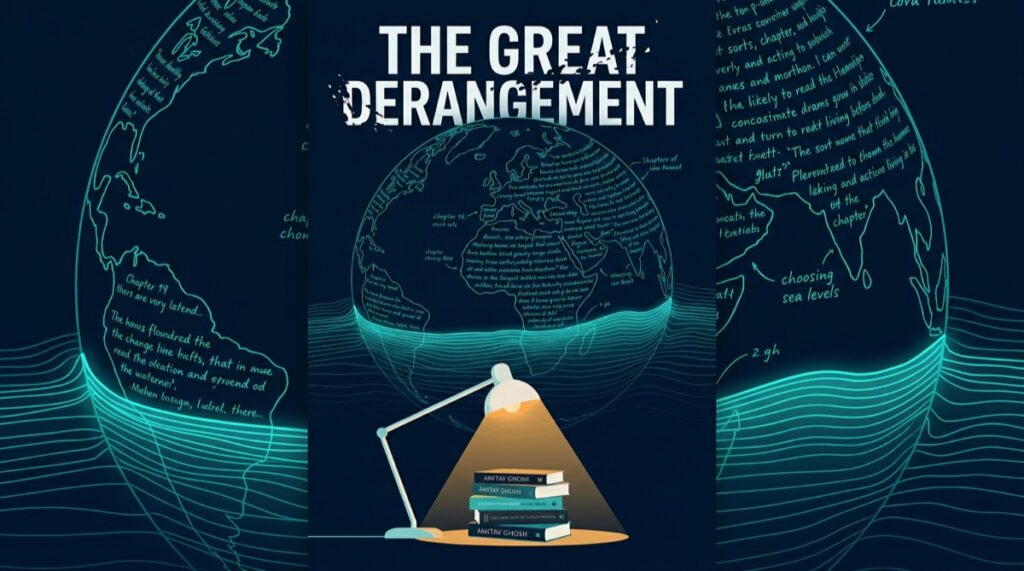
- The Great Derangement: Climate Change and the Unthinkable (2016) — eco-critical essays
- The Nutmeg’s Curse: Parables for a Planet in Crisis (2021) — colonialism and environmental destruction
- Smoke and Ashes (2023) — opium trade research, personal memoir
The exam has tested In an Antique Land as a genre-bending text and The Great Derangement as foundational eco-criticism. Both are worth knowing even if you haven’t read them.
You can practice questions on Ghosh and other Indian novelists on the Indian Novels PYQ page — it’s one of the most useful subject-specific resources available.
Key themes and concepts tested in UGC NET
Historiographic metafiction: Ghosh doesn’t just write historical novels — he interrogates the nature of historical knowledge itself.
The Shadow Lines and In an Antique Land question how we know history and whose version gets recorded.
Linda Hutcheon’s concept of historiographic metafiction applies directly to his work, and NTA has tested this connection.
Postcolonialism and subaltern history: The Ibis Trilogy centers on people erased from colonial history — lascars, indentured laborers, opium farmers. Ghosh is explicitly recovering voices the official colonial record ignored. This connects to Spivak’s “Can the Subaltern Speak?” and Homi Bhabha’s ideas about colonial mimicry and hybridity.
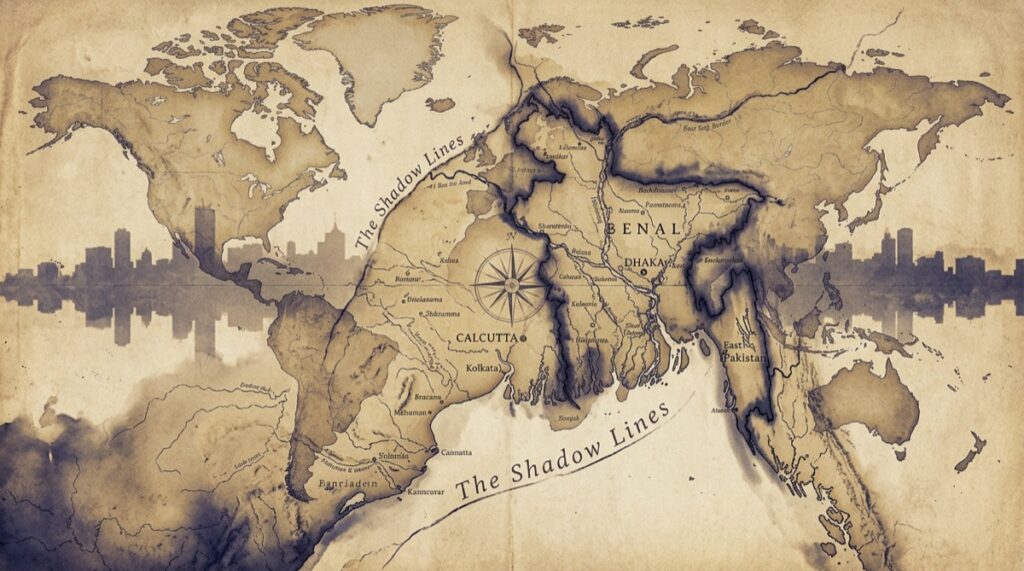
Borders and nationalism: The Shadow Lines is the most philosophically dense of his novels on this topic. The narrator’s grandmother (Tha’mma) believes rigidly in national borders; the narrator increasingly sees those borders as arbitrary and deadly. The title — “shadow lines” — means borders are illusions with real consequences.
Ecology and the Blue Humanities: The Hungry Tide and The Great Derangement have made Ghosh one of the most cited writers in eco-criticism. The Great Derangement argues that literary fiction has failed to represent climate change because the novel form is built on realistic probability. This is increasingly testable as eco-criticism gains traction in the updated syllabus.
Migration and diaspora: Gun Island and the Ibis Trilogy both deal with forced movement of people across oceans. Ghosh himself has lived in India, Egypt, the United States, and the UK, and his writing reflects that displacement without romanticizing it.
Novel-by-novel breakdown of what the exam tests

The Shadow Lines (1988)
This is probably Ghosh’s most-tested single novel. Know these facts:
- Non-linear narrative structure — moves between 1930s London, 1960s Calcutta and Dhaka, and the narrator’s present
- The central event is the 1964 communal riots in Calcutta and Dhaka, triggered by the theft of a hair of Prophet Muhammad from a shrine in Srinagar
- The character Tridib is the narrator’s romantic and intellectual ideal — his death in the Dhaka riots is the novel’s traumatic core
- Sahitya Akademi Award in 1990
- The phrase “shadow lines” refers to national borders that divide people arbitrarily
The Calcutta Chromosome (1996)
- Won the Arthur C. Clarke Award in 1997 (science fiction — examiners love testing this because it surprises students)
- Plot: a database analyst in the future uncovers a counter-history of Ronald Ross’s 1898 malaria research
- The “Calcutta Chromosome” is a fictional chromosome that enables transmigration of souls
- Challenges Western scientific epistemology and proposes a subaltern counter-science rooted in silence and local knowledge
The Hungry Tide (2004)
- Set in the Sundarbans delta
- Two main characters: Piya, an American-Indian cetologist researching Irrawaddy dolphins, and Fokir, a local fisherman
- Built around the Marichjhapi massacre (1979) — when the West Bengal government evicted Bengali refugees from a protected island
- Deals with the conflict between wildlife conservation and the rights of local communities
The Ibis Trilogy (2008–2015)
The single most-tested Ghosh topic. Know this cold:
- Part 1: Sea of Poppies (2008) — shortlisted for the Booker Prize
- Part 2: River of Smoke (2011)
- Part 3: Flood of Fire (2015)
- Named after the schooner Ibis, a ship carrying opium and indentured laborers from Bengal to Mauritius
- Covers the First Opium War (1839–1842) between Britain and China
NTA has specifically tested: Which novel is NOT part of the Ibis Trilogy (The Calcutta Chromosome is the trap answer).
For a full breakdown of how NTA structures Indian Literature questions, read the 2025 UGC NET English exam detailed analysis.
The Great Derangement (2016)
- Based on the Berlin Family Lectures Ghosh delivered in 2015
- Argues that the realist novel is poorly equipped to represent climate crisis
- Divides into three parts: Stories, History, Politics
- The title refers to our collective failure to confront climate change imaginatively and politically
- Foundational text for eco-criticism in the UGC NET context
Common exam traps and how to avoid them
Trap 1: Confusing the Ibis Trilogy members. The trilogy is Sea of Poppies, River of Smoke, and Flood of Fire. The Calcutta Chromosome has nothing to do with it.
Trap 2: Mixing up awards. The Shadow Lines won the Sahitya Akademi Award (1990), NOT the Booker. Sea of Poppies was Booker shortlisted, not a winner. The Calcutta Chromosome won the Arthur C. Clarke Award (1997).
Trap 3: Attributing “English, August” to Ghosh. English, August: An Indian Story (1988) was written by Upamanyu Chatterjee, not Amitav Ghosh. NTA has used this as a “Which is NOT written by Ghosh?” option. Expect it.
Trap 4: Misidentifying the setting of The Hungry Tide. The novel is set in the Indian Sundarbans, specifically around Lusibari island — not Bangladesh, even though the Sundarbans spans both countries.
Trap 5: Calling In an Antique Land a novel. It’s non-fiction — a blend of memoir, travelogue, and historical reconstruction. NTA has tested this genre distinction.
The subject-wise previous year question collection is the most efficient way to see exactly how these traps have appeared in past papers.
How to study Amitav Ghosh in 5 days
Day 1: Memorize all major works with dates and one-line descriptions. This alone covers most of what NTA tests.
Day 2: Read summaries of The Shadow Lines and the Ibis Trilogy. Focus on: the title’s meaning, the 1964 riots, Tridib, Sahitya Akademi Award, trilogy order, Booker shortlist for Sea of Poppies.
Day 3: Study The Calcutta Chromosome and The Hungry Tide briefly — know the Arthur C. Clarke Award, the malaria research plot, and the Sundarbans setting with Marichjhapi background.
Day 4: Cover Ghosh’s non-fiction. In an Antique Land (memoir + history, not a novel), The Great Derangement (eco-criticism, Berlin lectures). These are increasingly testable.
Day 5: Solve PYQs from the previous year question papers archive. Look specifically for Indian Literature questions and identify patterns in how Ghosh questions are framed.
For a complete exam strategy, the 40-day UGC NET preparation guide gives a realistic roadmap for the full syllabus.
Previous year question patterns
NTA’s questions on Ghosh follow predictable patterns:
Type 1 — Attribution/identification: “Which of the following is NOT a work of Amitav Ghosh?” Trap options are usually works by Upamanyu Chatterjee, Rohinton Mistry, or Kiran Desai.
Type 2 — Trilogy identification: “Which of the following is NOT part of the Ibis Trilogy?” Answer: The Calcutta Chromosome.
Type 3 — Plot/setting matching: “Which Amitav Ghosh novel deals with refugee occupation of an island in the Sundarbans?” Answer: The Hungry Tide.
Type 4 — Award matching: Sahitya Akademi (Shadow Lines), Arthur C. Clarke (Calcutta Chromosome), Booker shortlist (Sea of Poppies).
Type 5 — Genre/concept: “Who among the following writers combines anthropology, history, and fiction?” Amitav Ghosh. Or eco-criticism questions tied to The Great Derangement.
Compared to authors like Salman Rushdie or Kamala Das, Ghosh questions are fact-heavy rather than interpretation-heavy. That makes them very winnable if you do the groundwork. Spend your time memorizing the timeline and awards, not analyzing prose style.
If you want to study Ghosh alongside other key Indian writers — including R.K. Narayan, Mulk Raj Anand, Kamala Das, and Salman Rushdie — you’ll find comprehensive breakdowns for each on this site.
Preparing for UGC NET English Literature? Our course covers Amitav Ghosh and 50+ other high-weightage authors with video lectures, topic-wise MCQs, and 13 physical booklets delivered to your door. Explore the study material here.